A fishing industry that connects to the future
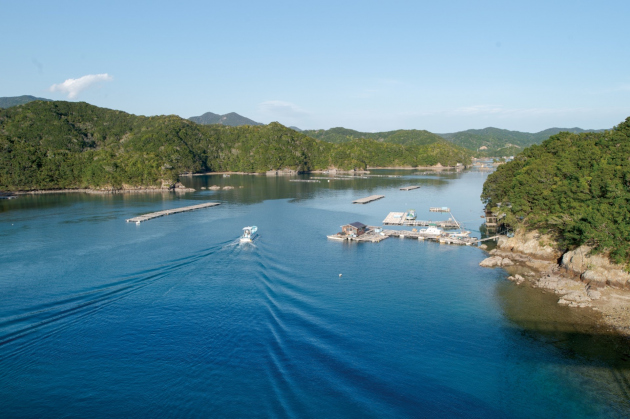
The Rias coast of Kumano Sea where high-quality Ise red sea bream grows
From Shima Time Summer 2020 issue
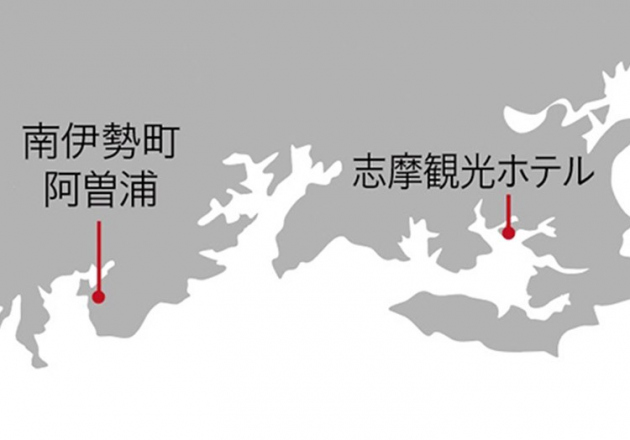
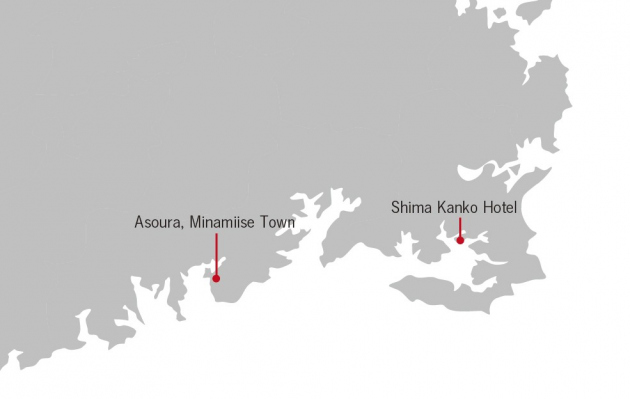
Located about an hour's drive from the hotel, Asoura in Minamiise Town is where red sea bream and appa shellfish (hiougi shellfish) are farmed. Among them, the farming of the local brand fish "Ise red sea bream," which is red sea bream fed with Mie Prefecture's specialty products, is thriving.
The "Ise red sea bream" was born from a project launched by 14 fish farming businesses scattered along the 80km coast of the Kumano Sea, in cooperation with Mie Prefecture and Mie University. It took about nine years to establish a year-round shipping system, record the number of fish raised and their environment, and check the quality, and the fish have been branded and are still being improved. This is a form of fishing that continues to evolve.
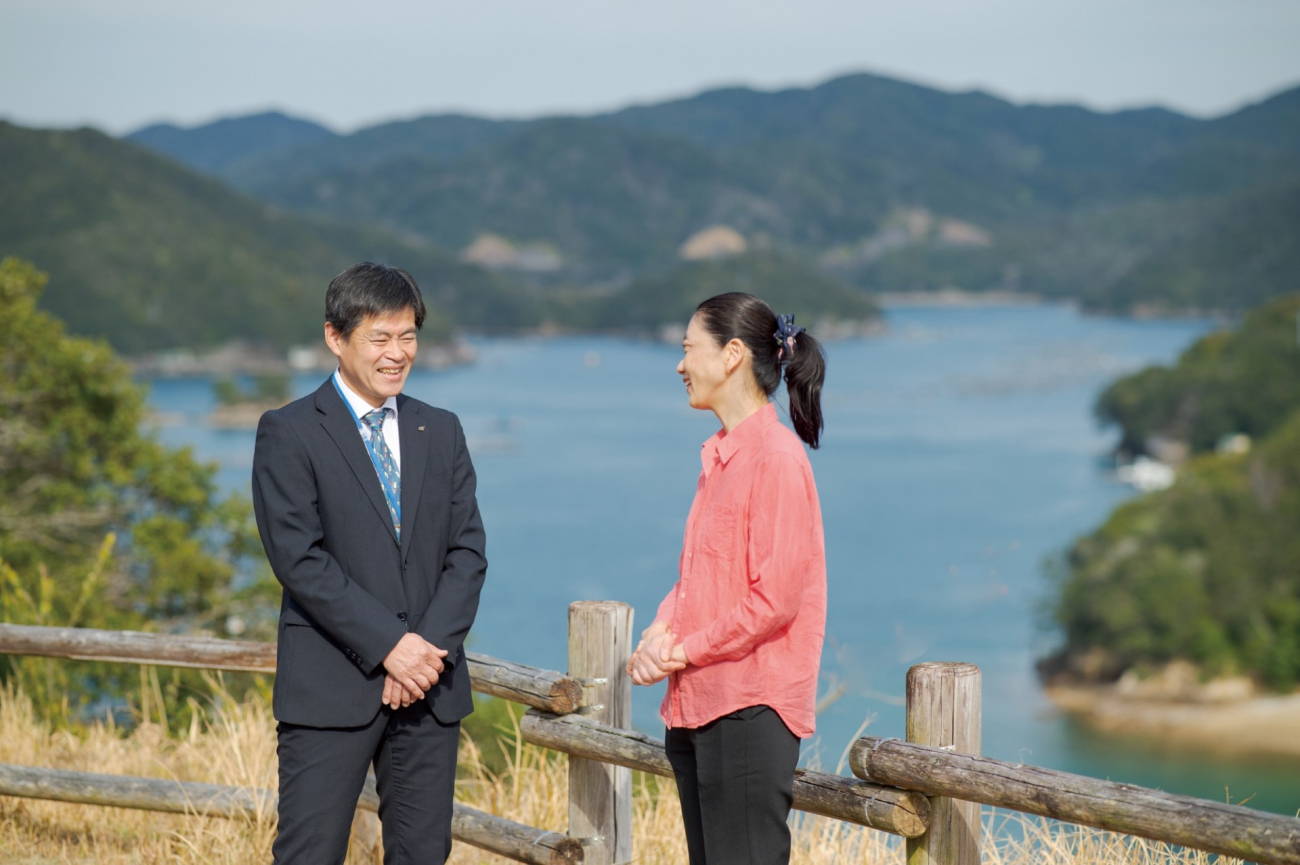
Mr. Matsuda and Executive Chef Higuchi talk about aquaculture
We spoke to Matsuda Koichi, head of the Owase Laboratory at the Mie Prefectural Fisheries Research Institute, who conducts research and provides advice on aquaculture in Mie Prefecture, about why the Kumano Sea is suitable for red sea bream aquaculture. "Many of the bays on the ria coast are intricate, and have the advantage of being less prone to storms from offshore. The shape of the ocean is also complex, just like on land, so the water is deep and the water quality and temperature of the fishing grounds are relatively stable, making it a comfortable environment for fish that are suitable for aquaculture. In addition, the mountains of Ise-Shima National Park block the wind, and the waves are calm, making it easy to work and allowing the fish to be carefully raised." The Fisheries Research Institute is working with fishermen through trial and error to improve the quality of Ise red sea bream.
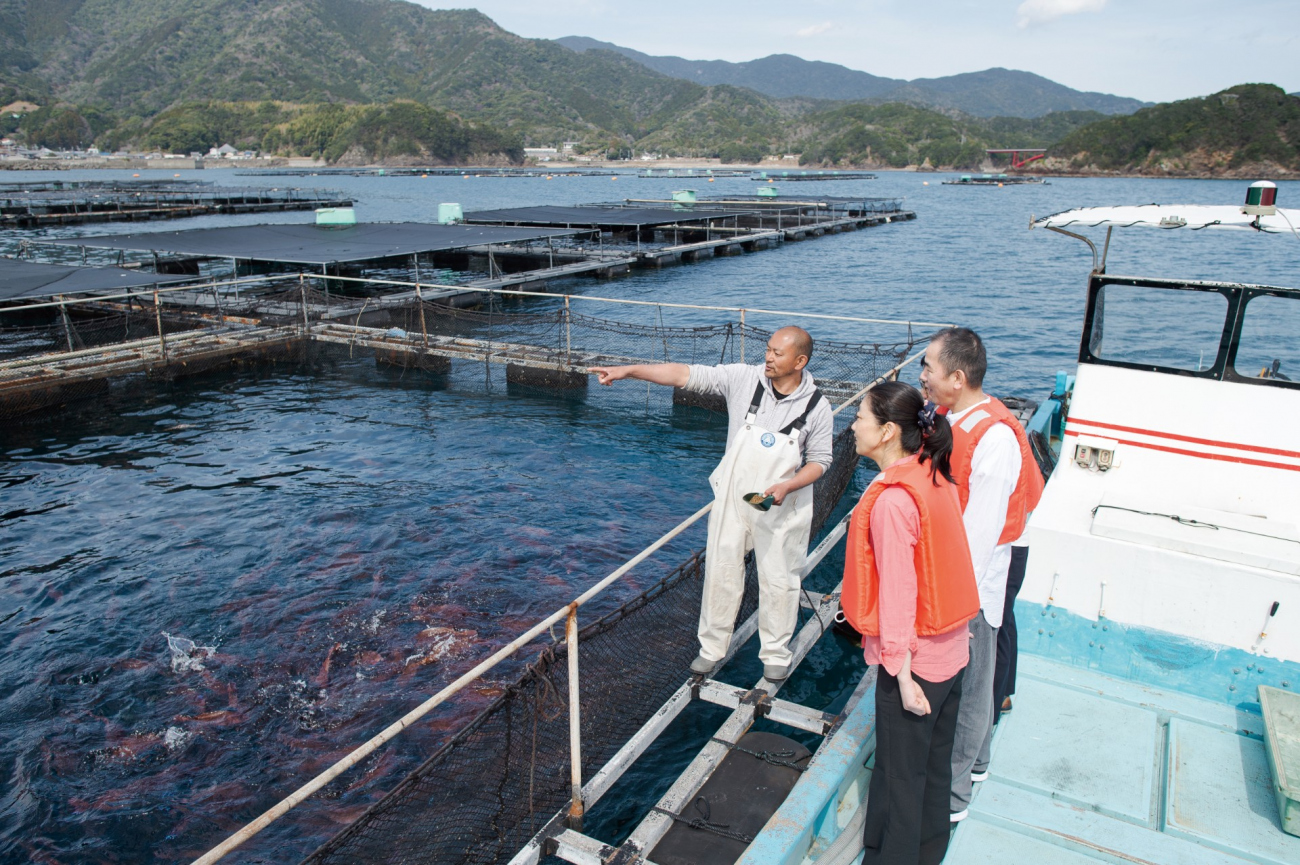
Executive Chef Higuchi and Executive Chef Tsukahara of Traditional Japanese receiving an explanation from Mr. Hashimoto
We visited Jun Hashimoto (Tomoei Fisheries), chairman of the Mie Prefecture Marine Fish Farming Council and a fish master who is conducting research on red sea bream together with the Fisheries Research Institute, and he showed us around the production site. It has been revealed that adding powdered tea, citrus fruits, and seaweed produced in the prefecture to the feed of "Ise red sea bream" reduces excess fat in the flesh and extends the period of freshness.
Executive Chef Higuchi asked, "What the fish eat when they grow up is important. What other things do you pay particular attention to when pursuing quality?" Hashimoto replied, "What makes it different from wild fish is that we can change their feed two weeks before shipping and control the taste and texture of the flesh. I often describe it as 'red sea bream raised for people to eat.' For example, if you increase the amount of tea you can further reduce the fat content of the flesh, and red sea bream that are fed a lot of citrus fruits have a faint citrus scent." He spoke of the possibilities of red sea bream farming.
The fishing industry evolves with the times.
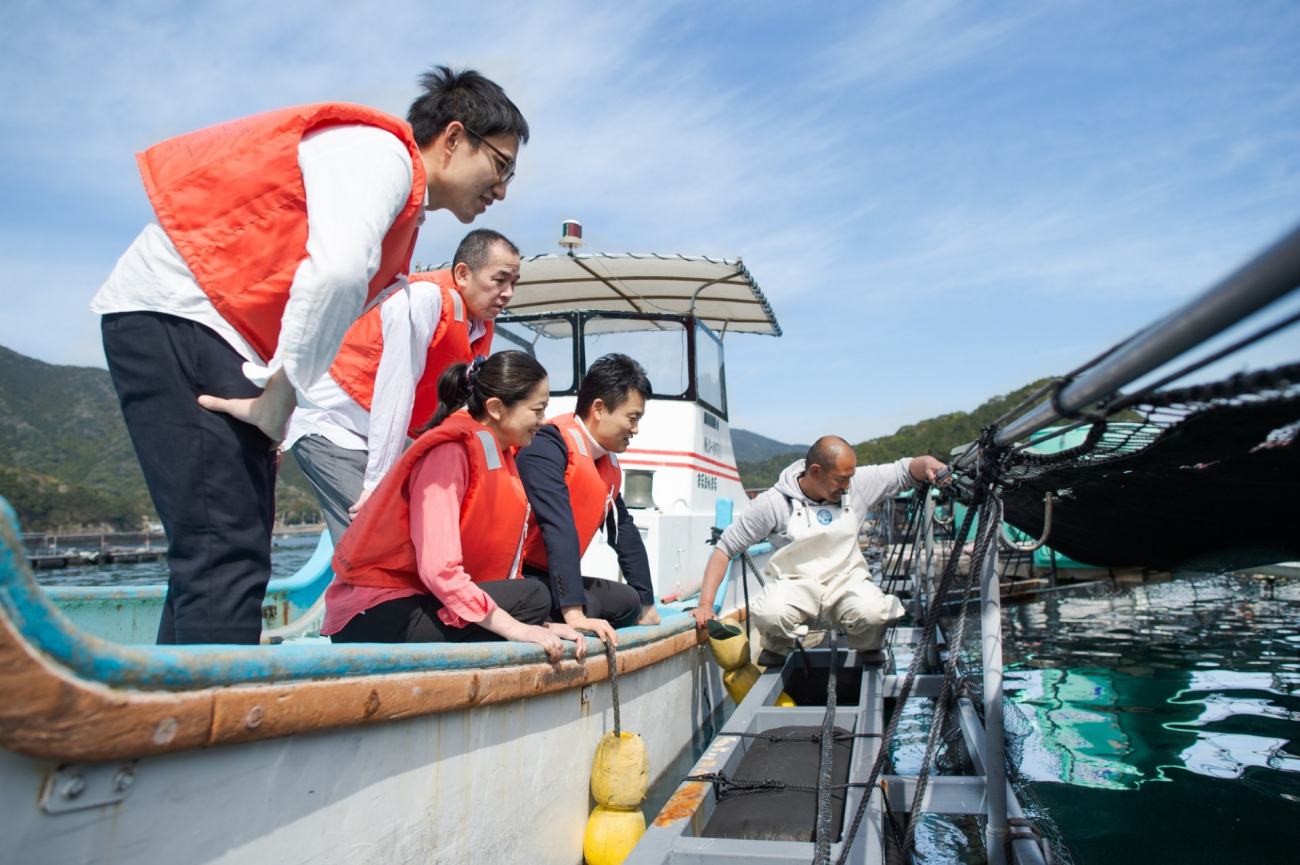
Murase (left) and Asakawa (right) inspect the red sea bream farming rafts from a fishing boat.
Hashimoto does not crowd the red sea bream into the farming rafts, but instead gives them enough space to swim like wild fish, which increases their movement and makes the quality of their meat closer to that of wild fish. He said that raising fish in a way that does not stress them is also necessary to produce high-quality ingredients. In addition to the two executive chefs, young chefs and service staff also participated on the day, and they offered questions and comments to Hashimoto from their respective perspectives.
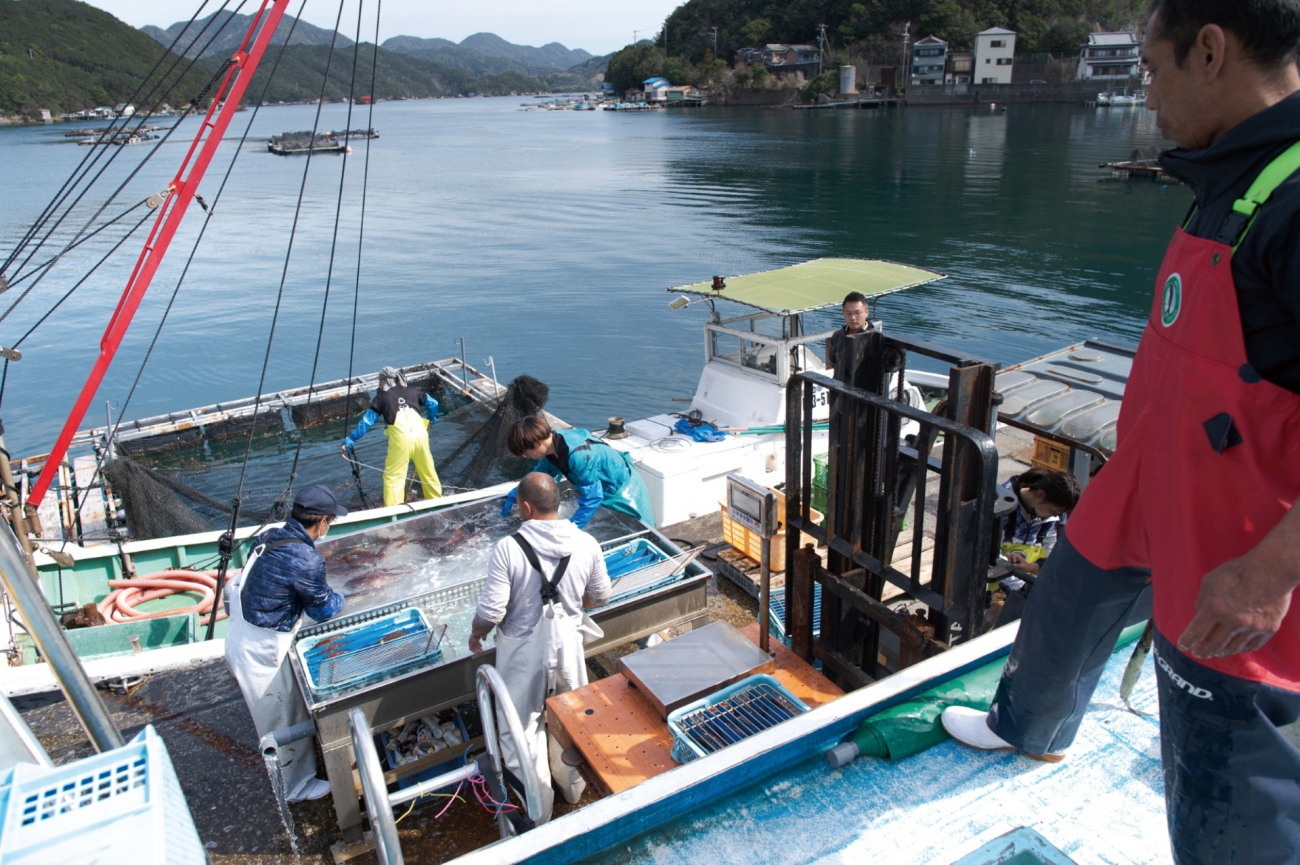
The farm rafts are moved to the port and the red sea bream are prepared for shipment.
At the port, we observed the landing of spiny red snapper. They are placed one by one in a partition to prevent damage to the body, and shipped alive. Tsukahara, the Traditional Japanese executive chef, said, "Spiny red snapper looks beautiful. Now I understand why. They are raised in an environment close to the wild, so the shape and size of their fins are firm and beautiful. In Traditional Japanese, which is also enjoyed with the eyes, appearance is also an important element." Higuchi, the executive chef, said, "I hear from people in the fishing industry that the number of wild fish in the seas near our coast is decreasing. This is an issue that directly affects us as chefs. We want to continue learning together, while thinking about marine resources and making use of the merits of both farmed and wild fish in our cooking, sharing with the service staff the background of each ingredient and the thoughts of the producers, so that we can convey their appeal to our customers."
Research into bait conducted with the prefecture has dramatically improved the quality of the red sea bream, unifying the farming methods of producers in different regions. Furthermore, the "evolving form of fishing" such as the use of IT for production volume and quality control has created the "Ise red sea bream," a brand fish representing the region.
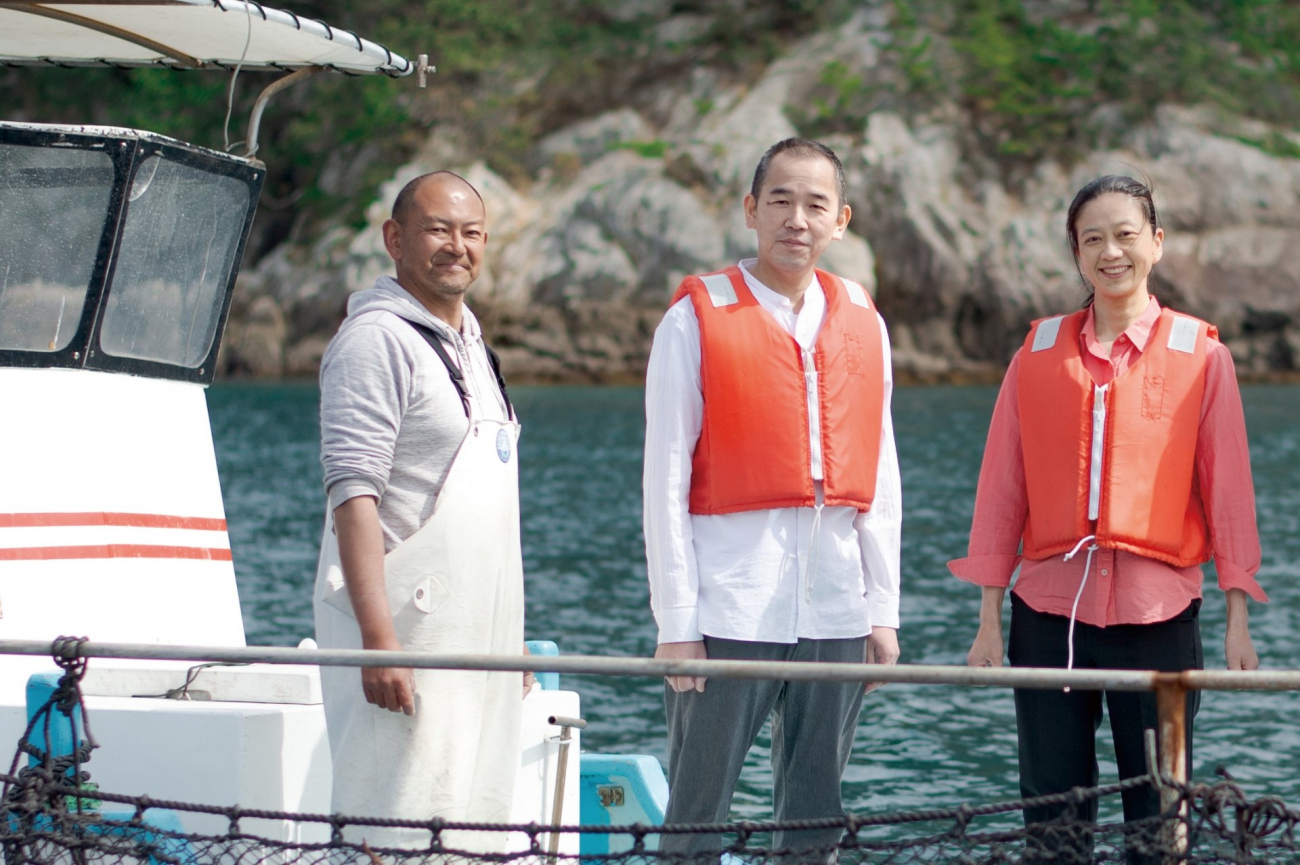
From the left: Mr. Hashimoto, Traditional Japanese Chef Tsukahara, and Executive Chef Higuchi
| Executive Chef Hiroe Higuchi | She joined Shima Kanko Hotel in 1991. In 2008, with the opening of Bay Suite, she became the chef of the French Restaurant “La Mer” In 2014, she was appointed Executive Chef of Shima Kanko Hotel, and in 2016, she was in charge of the working dinner at the Ise-Shima Summit. In 2017, she became the first woman and the first person from Mie Prefecture to receive the Bronze Award for Cuisine Masters Award from the Ministry of Agriculture, Forestry and Fisheries' Culinary Recognition Program. |
|---|---|
| Traditional Japanese executive chef Kyoji Tsukahara | He joined the Hakata Miyako Hotel in 1986. He trained at the Japanese restaurant "Shikitei", and in 1987 at the Miyako Hotel Osaka(now the Sheraton Miyako Hotel Osaka ) Japanese restaurants "Miyako" and "Uemachi". In 2016, he was involved in providing Traditional Japanese cuisine at the Ise-Shima Summit. In 2019, he was appointed Executive Chef of the Traditional Japanese cuisine at the Shima Kanko Hotel . |
The flesh is plump and fragrant. "Ise Red Sea Bream Papillote"
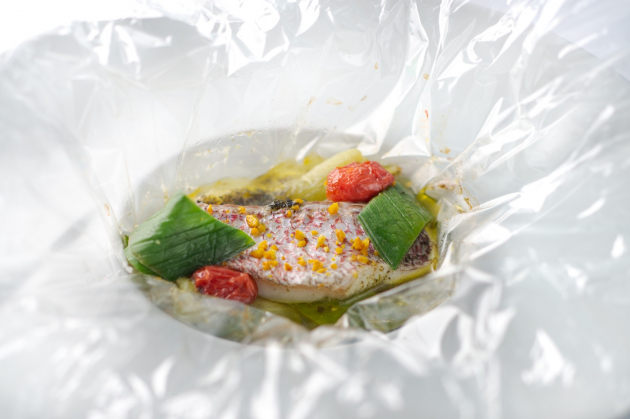
Ise red sea bream, which has the advantage of being farmed fish with little individual variation and a consistent taste, is carefully raised with particular attention to the feed it is given. Inspired by the citrus fruits and seaweed of Mie that red sea bream eats, it is wrapped and baked (papillote) in butter mixed with dried citrus peel and seaweed powder. The bouillon made from red sea bream bones is combined with clam and abalone jus to add richness and depth to the flavor. The richness of the seaweed butter balances the flavor of the refreshing red sea bream meat and adds a hint of the seashore. Dried tomatoes are also used to add an accent and umami flavor.
When you take it out of the oven and open the package in front of your guests, the rich aroma of the sea spreads out. This dish features a variety of overlapping flavors on top of the plump steamed "Ise mackerel."
<Available on the a la carte menu from June 2020 to August 2020>
| Rates | ¥4,300 (¥5,203) per person |
|---|---|
| French Restaurant “La Mer” | the BAY SUITES 5F Lunch 11:30-14:30 (Entry until 13:00 / Private reservation only) Dinner 17:30-22:30 (last orders 20:30) |
Enjoy "Ise red sea bream" with Traditional Japanese techniques
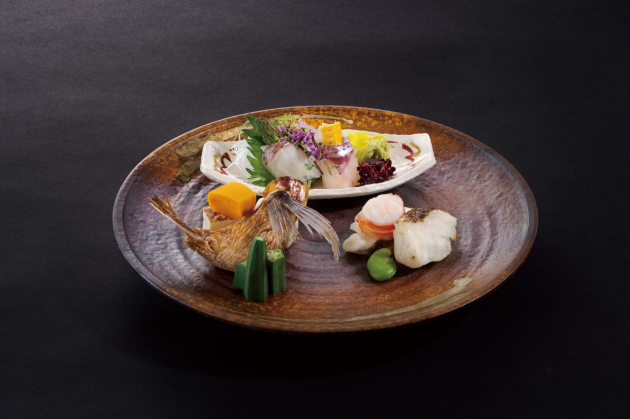
This dish makes the most of the charms of the Ise red sea bream, which is characterized by its natural flavor and beautiful appearance as it moves around freely on a wide raft.
The long fins are boiled to bring out their beautiful appearance. The "kama" part under the fin is fatty, and the meat is so tender that it falls apart easily, which goes well with the sweet and spicy flavor of the meat cooked in sake, soy sauce, and mirin. For sashimi, the skin is parboiled and left on the surface to give it a light and elegant taste, and by chilling it in ice water you can enjoy the elasticity of the meat and the chewy texture of the skin. For grilled dishes, the fish is salt-grilled over Ise-Shima Binchotan charcoal, giving it a simple white fish flavor. Grilled over high heat, the skin is crisp and fragrant, and the meat is plump, locking in the flavor.
We have created a dish that allows you to enjoy the delicious flavor of Ise red sea bream in a variety of cooking methods.
| Rates | ¥4,300 (¥5,203) per person |
|---|---|
| Japanese Restaurant “Hamayu” | the BAY SUITES 4F Lunch 11:30-14:30 (Entry until 13:00 / Private reservation only) Dinner 17:30-22:30 (last orders 20:30) |
La the CLASSIC Gas shrimp tartare, wrapped in spiny red sea bream.
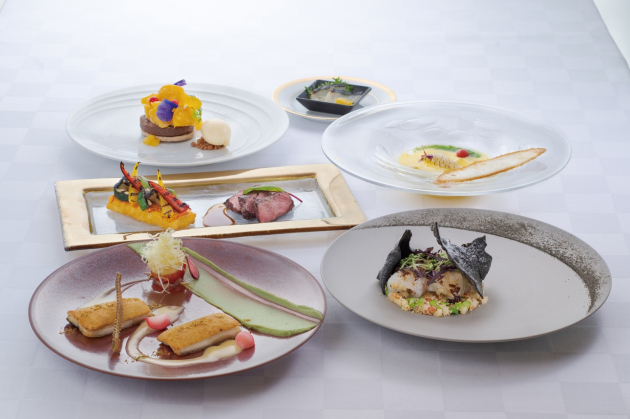
From July to August, Saison La Mer will be introducing a menu using Ise red sea bream.
By marinating the spiny sea bream, the moisture is removed to a moderate extent, giving the meat a moist texture and concentrating the umami and sweetness. The dish is wrapped in a tartar sauce made from gasu shrimp from Higashikishu and chopped Ise takuan radish, bringing together the differences in texture and the complexity of the flavor, creating a deep taste.
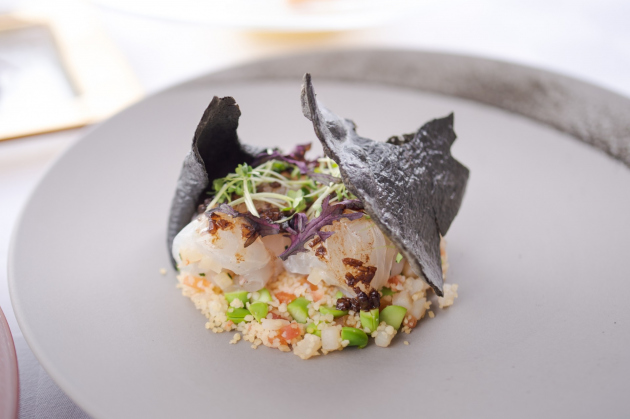
It also combines the sourness of vinegar, the aroma of spices, and couscous, a type of pasta seasoned with anchovies. The scallop paste is garnished with chips made from kneaded bamboo charcoal, adding a playful touch of color. This dish goes well with any ingredient and brings out the flavor of red sea bream, which is used in a variety of cuisines.
| Time | 11:30-14:30 (L.O. 14:00) |
|---|---|
| Rates | ¥12,700 (¥15,367) per person |
| Restaurant “La Mer the Classic” | the CLASSIC 1F Lunch 11:30-14:30 (last orders 14:00) Dinner 17:30-22:30 (last orders 20:30) |
Return to Feature Articles List
Shima Kanko Hotel quarterly magazine "Shima Time"
As the seasons change, Shima Kanko Hotel quarterly magazine, "Shima Time," introduces the four seasons of Ise-Shima through the local culture and abundant nature.