Changing sea, unchanging feelings
Embracing nature and living together
From Shima Time, Spring 2021 issue
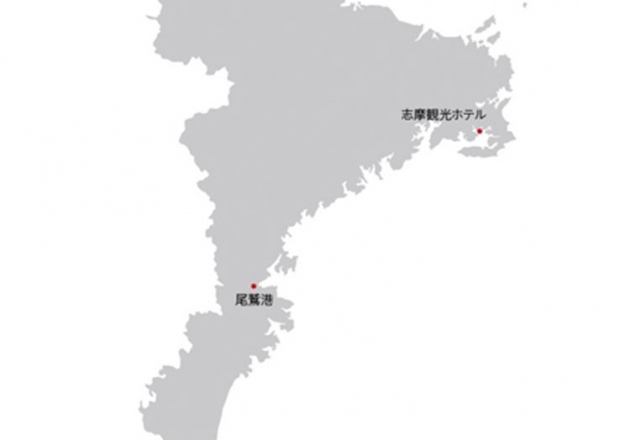
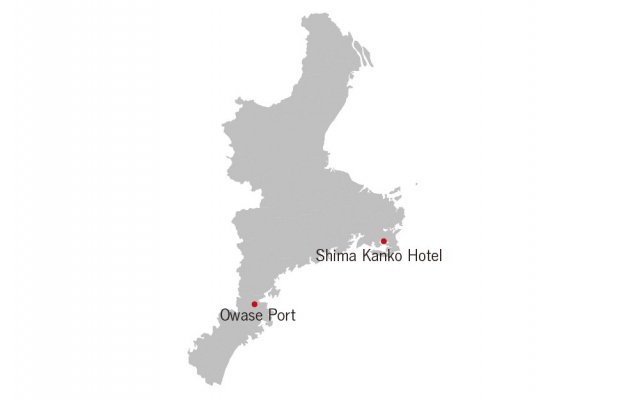
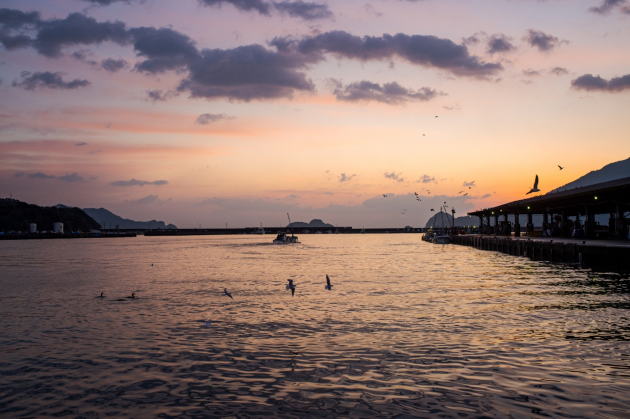
Owase City, located in the eastern Kishu region of Mie Prefecture, receives so much rain that it ranks first or second in the country in terms of annual precipitation, and nutrient-rich water from the forest flows into the city, where plankton grows and creates a rich ocean. Some of the forests on the ria coast facing the Kumano Nada Sea have been designated as "fish-bearing conservation forests," where cutting is prohibited in principle, in order to maintain biodiversity and conserve fishing resources, and efforts are being made to protect the forest environment in order to maintain good fishing grounds.
"Leaving it to the sea" is the way of life in a port town.
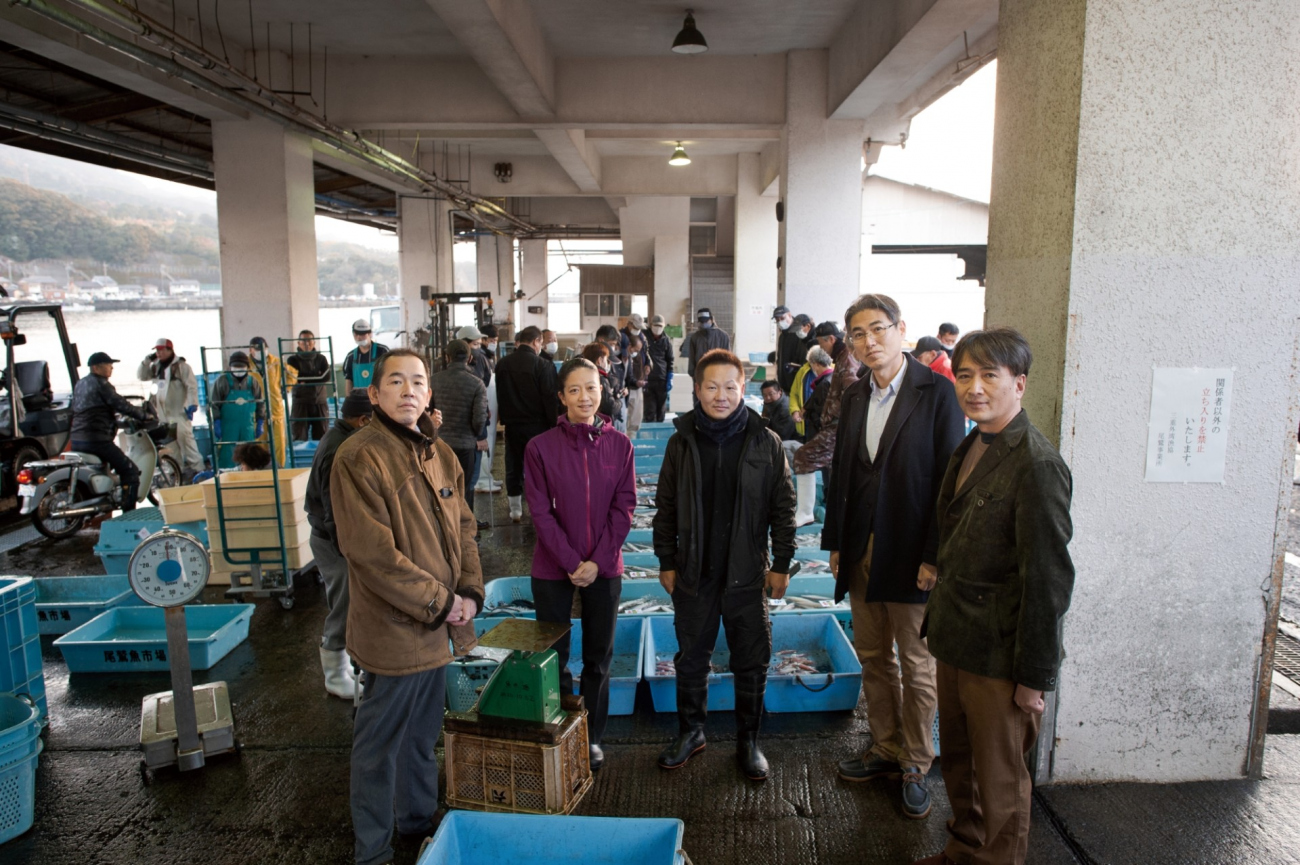
From left: Traditional Japanese Executive Chef Tsukahara, Executive Chef Higuchi, Mr. Iwasaki, Chef Sommelier Sugihara, and Chef Kurino.
At Owase Port
Owase Port at 7am. As the bidding begins, Iwasaki's phone keeps ringing with many customers who trust his fish judgement. "There are no fish today." Fishermen say that the season for catching fish has changed due to changes in seawater temperature caused by global warming, not just in Owase, and that this year there has been less rain than usual, which may be why there are so few fish. The sea is nature that is constantly changing. "When there is little rain, nutrients from the mountains don't enter the sea, so plankton, which is the source of the fish food chain, doesn't grow."
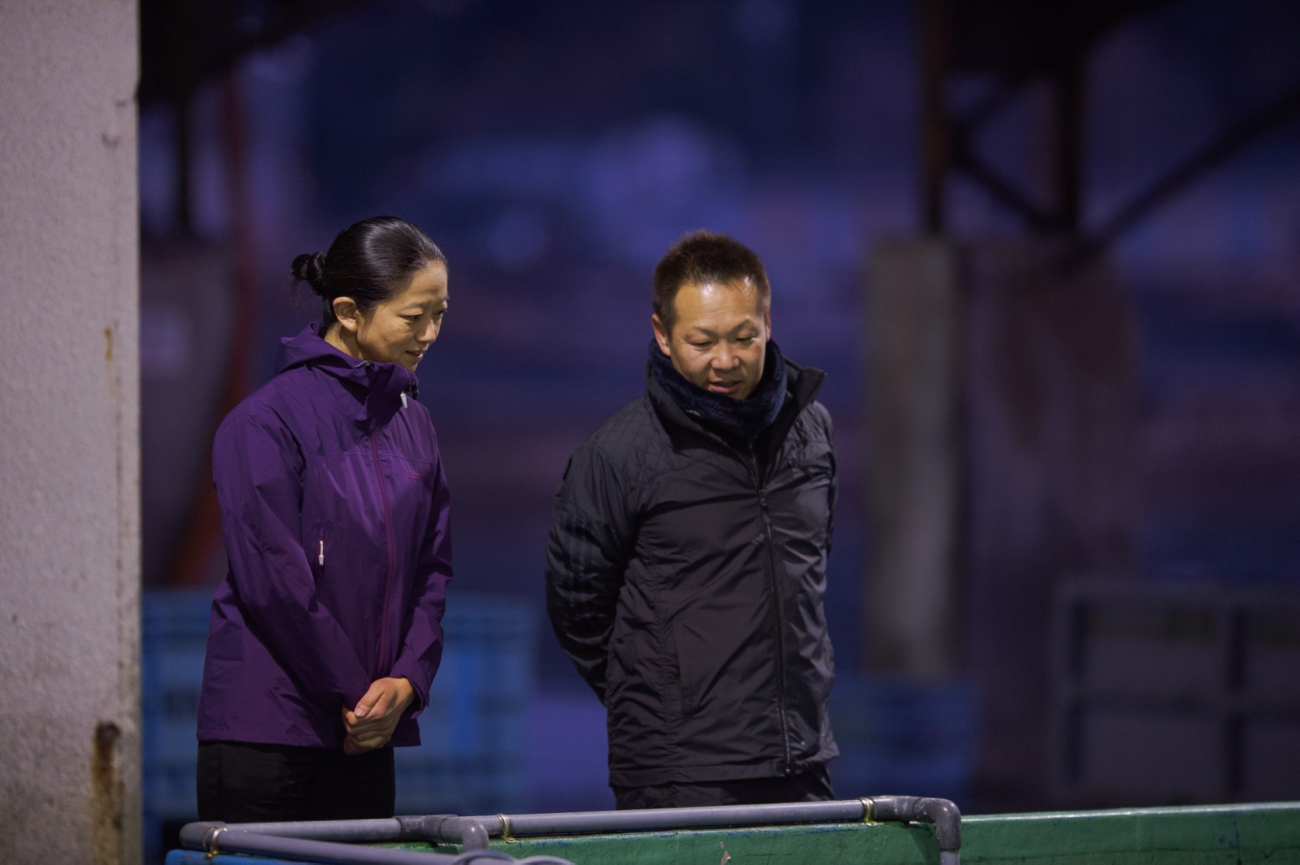
Talking about fish in front of Mr. Iwasaki's fish tank at Owase Port
Nevertheless, whenever a truck loaded with fish arrives from a fishing boat or fishing village, a bid is held, and a variety of fish species, including bonito, hairtail, red barracuda, red squid, and sometimes sharks, are lined up, although only a few. "When there are few fish, the price goes up. But if no one buys them, the fishermen can't go out fishing." That's why Iwasaki says he bids even for fish with low demand. "Sometimes there is, sometimes there isn't." The idea of "leaving it to the sea," which entrusts nature, is deeply rooted in the port town, and many fish stores in Owase continue to do business that does not waste the blessings of the sea, such as processing the fish caught at the time into dried fish. "Unlike urban markets like Toyosu, we don't have all the fish we want. But my job is to sell all the fish the fishermen catch." And the fishermen do not forget to respect nature, such as by following traditional fishing methods.
From early November to mid-June, Owase is home to an abundance of yellowtail, making the port bustling. The traditional fishing method, Oshikiami fishing, involves setting up a net approximately 1,000 meters long in the path of fish, taking advantage of the fish's tendency to keep moving forward and guiding them into a drop net at the end of the net. The remaining fish in the net are designed to return to the sea, so only a few percent of the total fish caught in the net are caught. This eco-friendly fishing method, born from the wisdom of our ancestors, is still practiced today.
A gift from nature. Let your individuality KAGAYAKI.
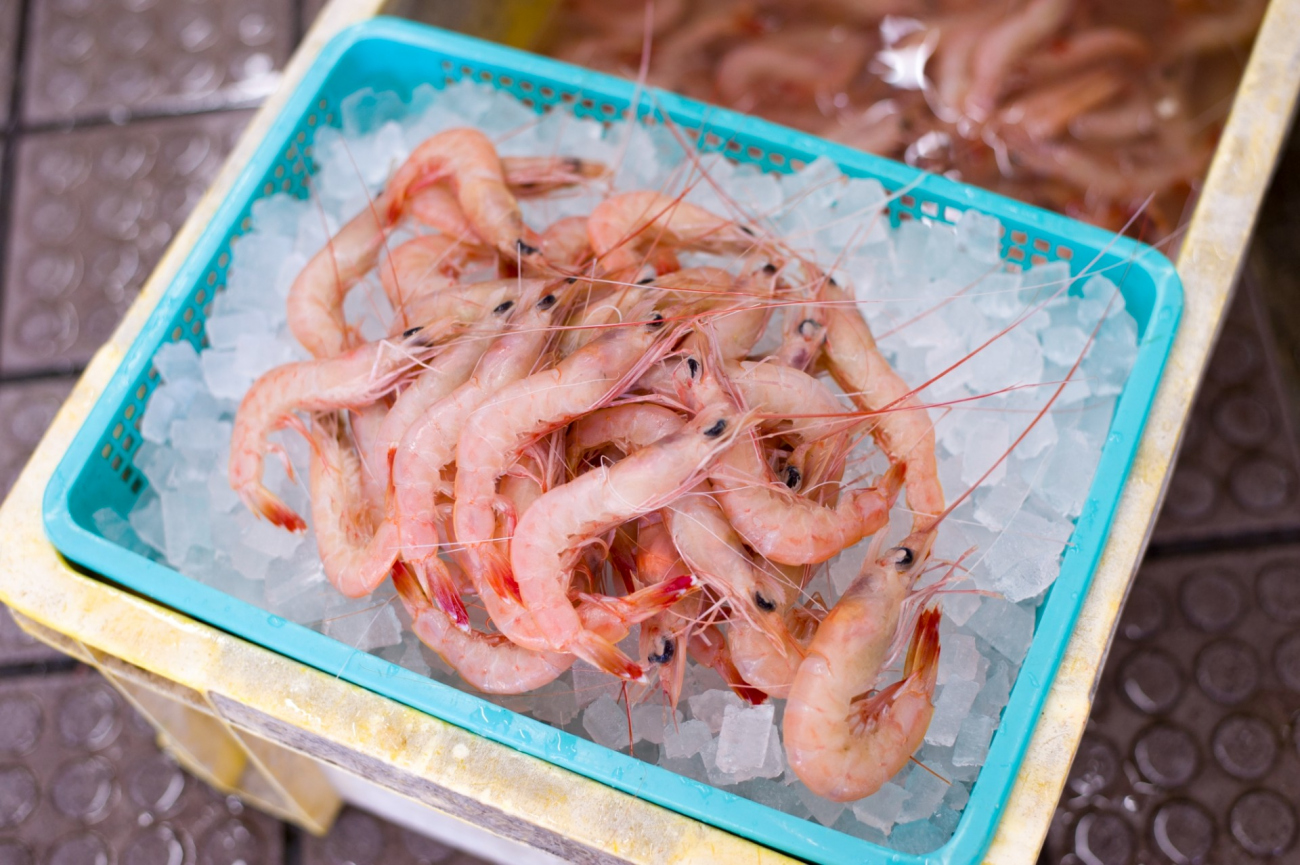
Gasu shrimp landed at Owase Port and lined up at Iwasaki Fish Shop
Gasu shrimp is popular among locals. It has a sweet, savory taste and a strong aroma, and is so delicious that even gourmets groan. When there is a big catch of gasu shrimp, Iwasaki buys 150 kg in a day, but it sells out all of it. Executive chef Higuchi also fell in love with the taste and has been using it for the past three years. "Few people know about it, and only a limited number of people eat it. Cooking and letting people know about these delicious shrimp and fish from Owase is an important role for us chefs to convey the charm of the region through food," says Executive chef Higuchi. Iwasaki says, "We can only ship what is in the sea. Actually, Higuchi ordered fish in the past, but unfortunately we couldn't deliver the fish he wanted due to a poor catch. However, Higuchi said, "It's fine if you send us the fish of the day." I had the opportunity to eat Higuchi's dish using the "barracuda" that I delivered at that time. It turned out to be a wonderful French dish. I was very impressed."
Higuchi said, "Even if the fish we receive from the sea are not what we wanted, they are special to us. We think it is important to use our skills and ingenuity to turn nature's gifts into dishes that our customers will enjoy, and it is a lot of fun to think about what kind of dish we should make." The "sea-based" style, which is kind to nature and producers, and Shima Kanko Hotel's Higuchi-style "Seafood French Cuisine" will continue to be a part of the future.
Higashi Kishu, a blessing from the Kuroshio Current, gas shrimp in various forms.
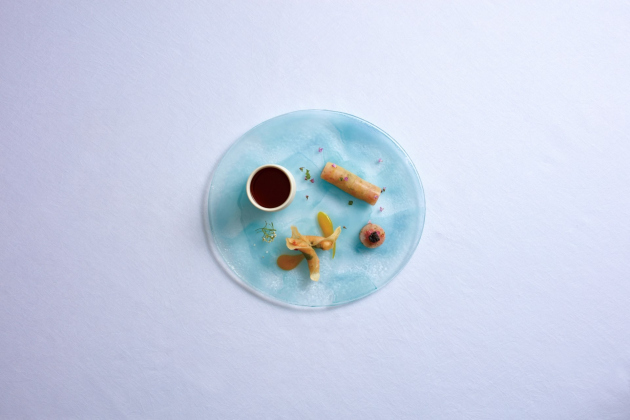
This dish makes the most of the characteristics of gasu shrimp, which is sweeter and has a stronger umami flavor than amaebi shrimp. First, take a sip of the warm broth. The dish begins with the umami flavor of Shima-produced bonito flakes, which are also used in the "shinsen" (offerings to the gods), also known as the food of the gods. There are two types of gasu shrimp tartare: one wrapped in thinly sliced apples to take advantage of the sweetness of the shrimp, and one accented with the saltiness of caviar. For the fritters, gasu shrimp and shiso leaves are wrapped together and deep-fried to lock in the umami flavor. The sauce uses shiranui (dekopon) from Minamiise, combined with the refreshing acidity of citrus fruits.
Please enjoy the charm of the precious gas shrimp from Higashi Kishu together with an elegant glass of champagne.
<Available in the "Degustation" course in March and April>
| Wrench Restaurant "La Mer" | the BAY SUITES 5F Dinner 17:30-22:30 (last orders 20:30) |
|---|---|
| Executive Chef Hiroe Higuchi | She joined Shima Kanko Hotel in 1991. In 2008, with the opening of Bay Suite, she became the chef of the French Restaurant “La Mer” In 2014, she was appointed Executive Chef of Shima Kanko Hotel, and in 2016, she was in charge of the working dinner at the Ise-Shima Summit. In 2017, she became the first woman and the first person from Mie Prefecture to receive the Bronze Award for Cuisine Masters Award from the Ministry of Agriculture, Forestry and Fisheries' Culinary Recognition Program. |
- There may be days when we are unable to provide the product depending on stock availability.
Return to Feature Articles List
Shima Kanko Hotel quarterly magazine "Shima Time"
As the seasons change, Shima Kanko Hotel quarterly magazine, "Shima Time," introduces the four seasons of Ise-Shima through the local culture and abundant nature.