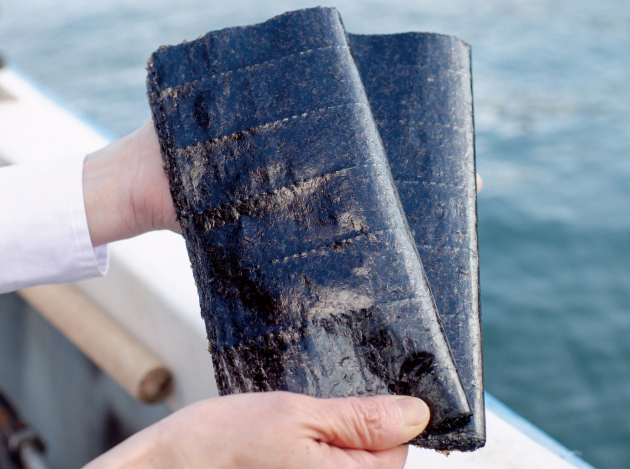
Black seaweed from Toshijima, polished by rough seas
Inheritance of Pride
From Shima Time, Spring 2024 issue
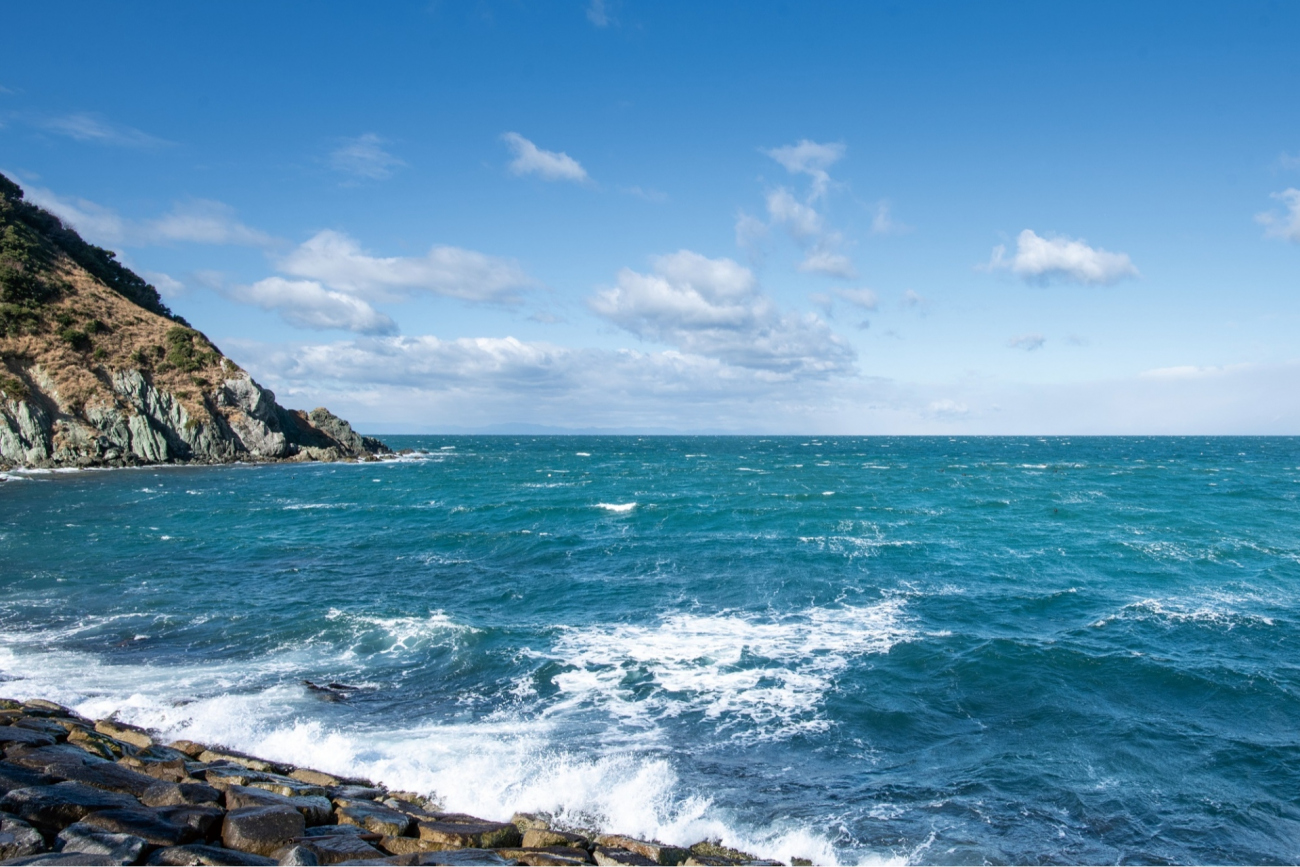
The sea where the currents of Ise Bay flow
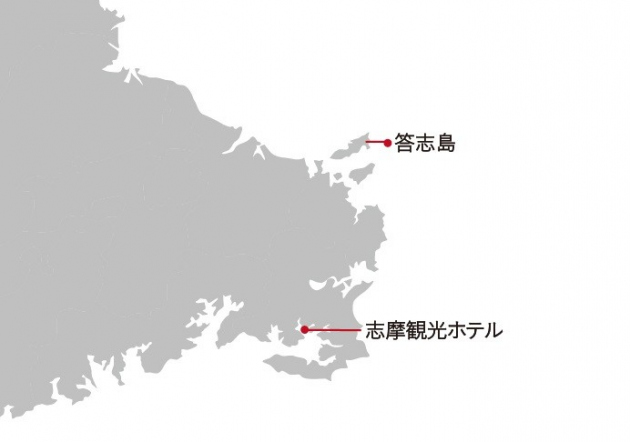
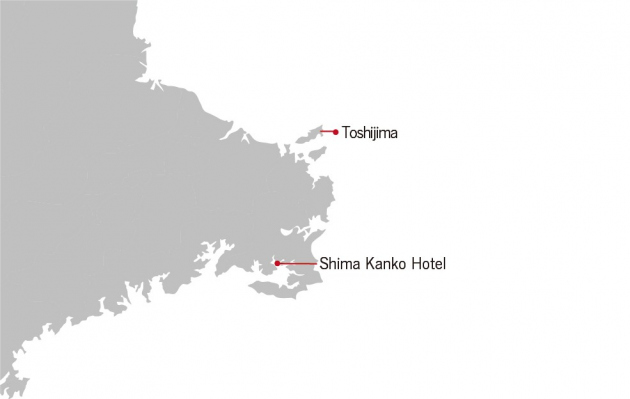
Nutrients from the Suzuka Mountains and Odaigahara flow into Ise Bay via rivers, including the Kiso Three Rivers.
Toshijima, one of the outlying islands of Toba City, is located at the entrance to Ise Bay, where the ocean current flows counterclockwise. Because it is rich in plankton and the small fish that feed on it, it is an island where fishing is thriving, producing a variety of fish species, including the branded fish "Toshijima Toro Sawara" and whitebait.
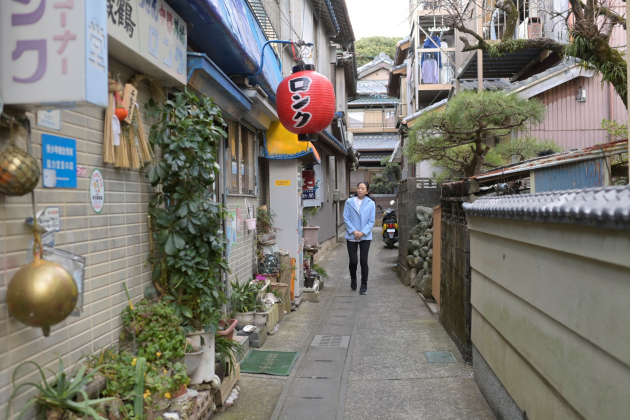
With a population of approximately 1,750, the island attracts many visitors seeking the gourmet cuisine of fresh seafood caught on the shore. In the summer, it's also a popular tourist destination where you can enjoy marine activities. The charming, old-fashioned fishing village townscape is another of its attractions.
This time, Executive Chef Higuchi and Chef Kurino visited people involved in the production of black seaweed, learning about fishing and processing methods, as well as the unique food culture. There, they found the islanders' pride in black seaweed and their strong desire to protect the island's unique culture.
A unique and blessed sea where high-quality black seaweed grows.
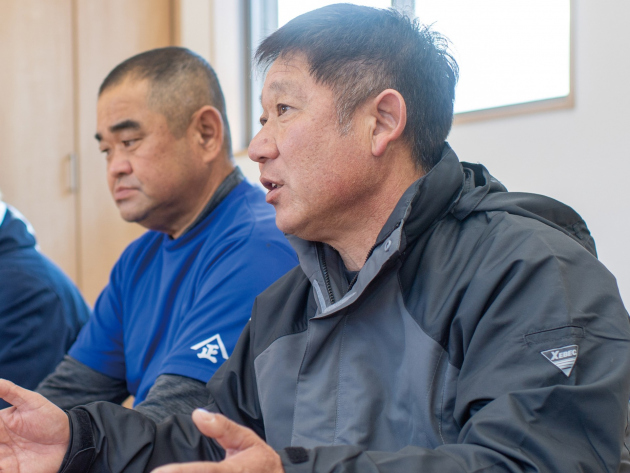
Toshiki Hamaguchi (right) and Toshiya Yamashita (left)
From the Sadahama ferry terminal at Toba Port, which is quite close to Toba Station, you can take a regular ferry and arrive at Toshijima Island in about 30 minutes.
At the Toba Isobe Fisheries Cooperative building located within Toshi Fishing Port, we spoke with Toshiki Hamaguchi, chairman of the Toshi branch management committee and a seaweed farmer, Toshiya Yamashita, also a seaweed farmer, and Shin Onozato of the fisheries cooperative, who has been involved in the development of seaweed farming for many years, about the cultivation of black seaweed.
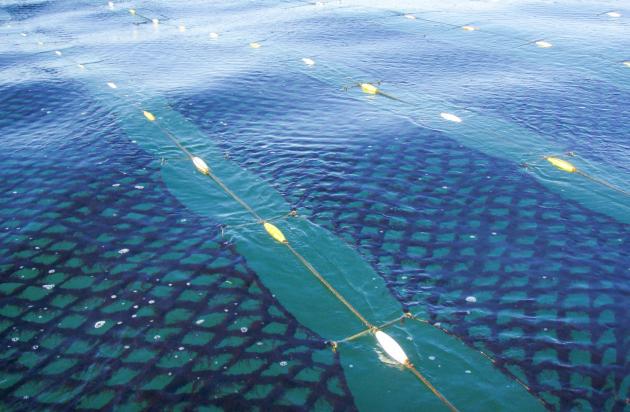
Floating-type cultivation farm for black seaweed
Black seaweed cultivation involves stretching nets with seaweed sprouts attached into the sea and repeatedly harvesting the grown seaweed leaves from winter to spring. There are two main methods: the "pole method," which involves sticking poles into shallow waters, and the "floating method," which is used in deeper waters.
While black seaweed cultivation is generally carried out in calm waters, the floating cultivation method used on Toshi Island is a little different. Mr. Hamaguchi explains, "In other regions, black seaweed sprouts are grown to about 10 cm before being attached to nets, but on Toshi Island, cultivation begins when they are 3 mm long. Because it is an island that is affected by the currents of Ise Bay, the waves at the cultivation site are rough, and if the sprouts are long, they will break. However, the seaweed that grows in rough waves is thin and the leaves are tightly packed, so the color and flavor are rich and it has a good texture. It is said that cultivating seaweed in such a place is rare throughout Japan."
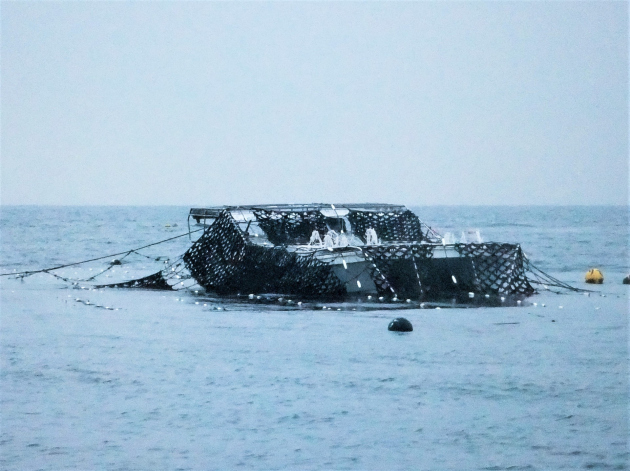
Scenes from black seaweed harvesting

They fish by diving under the nets.
Yamashita explains, "We grow the seaweed on a net that measures 1.3m x 19m until it reaches about 20-30cm in height. Then, a submersible equipped with a harvesting machine goes under the net and picks the seaweed. It's a job where we're tossed around by the waves, so we sometimes feel like our lives are in danger."
In addition to ocean currents, Ise Bay has other conditions that contribute to the growth of high-quality black seaweed. Mr. Onosato explains, "In winter, seasonal winds from the northwest cause upwelling, where seawater rises from the deep to the surface, supplying nutrients to the coast of Mie Prefecture. Furthermore, the fishing grounds of Toba are greatly influenced by open ocean water originating from the Kuroshio Current, and because it mixes with river water from Ise Bay, it becomes a rich fishing ground."
It is said that a unique characteristic of Toshijima Island is that black seaweed farmers also engage in fishing, such as octopus fishing in the summer and Spanish mackerel fishing in the autumn.
Tōshijima's unique processing methods and food culture
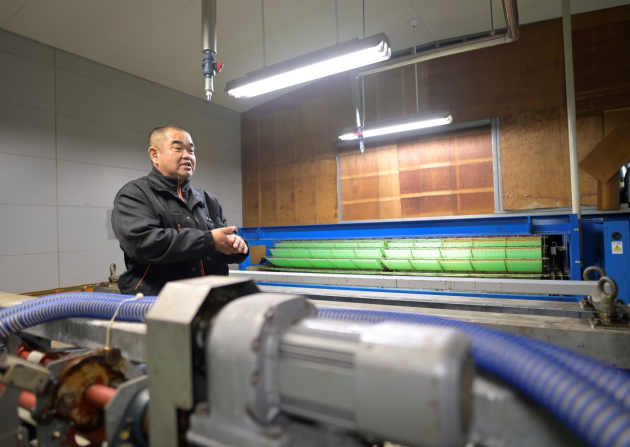
Mr. Yamashita gave us a tour of the processing plant where black seaweed is produced.
Previously, each aquaculture farm had its own processing plant, but considering the need for consistent quality and the future prospects of the industry, the fisheries cooperative invested in and created a joint processing plant 10 years ago.
The general processing method for black seaweed involves first washing it in sterilized seawater to remove dirt and impurities. Then, it is finely cut, and the black seaweed is formed into individual squares using a bamboo mat, followed by dewatering and drying.
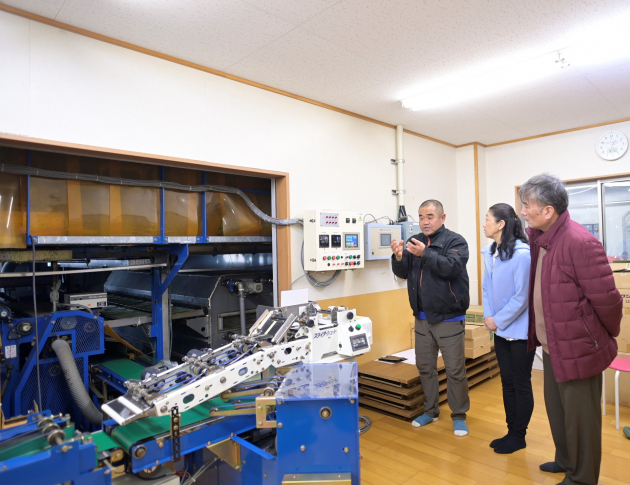
Toshiya Yamashita speaking about black seaweed at the joint processing plant.
On Tōshijima Island, a process called "thall freezing," in which seaweed is frozen immediately after harvesting, has been practiced since the 1970s.
By pre-treating the frozen black seaweed by manually removing impurities while thawing it in water, the rinsing time is shortened compared to normal, and the sweet components of the seaweed that would otherwise be washed away during processing are preserved.
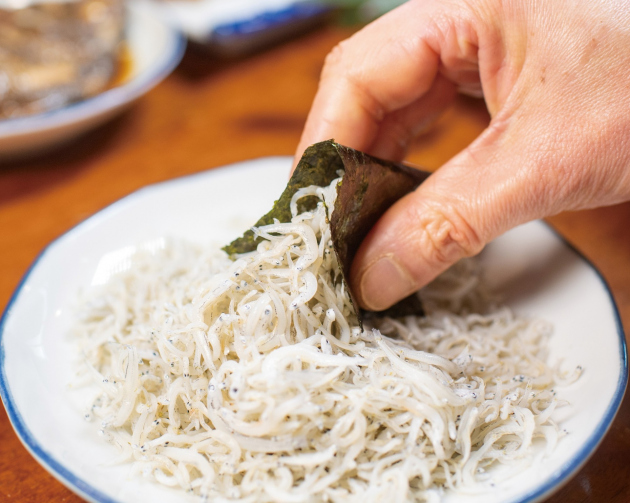
Whitebait is also a specialty of Toshi Island. I'll enjoy it in luxury.
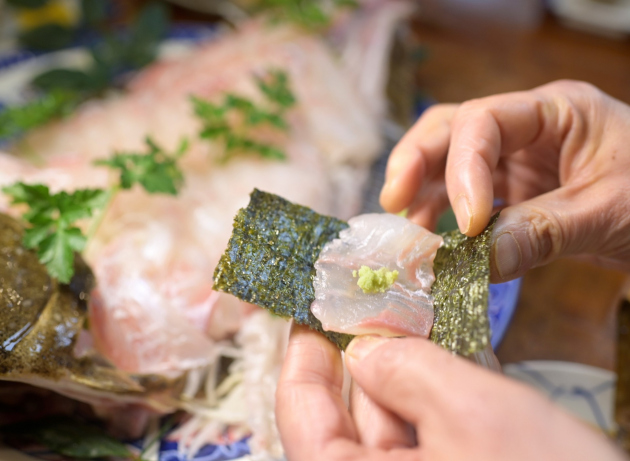
Wrap the sashimi in seaweed. The aroma of the sea will fill the air.
When we asked Mr. Onosato about the criteria for delicious nori that is highly valued in the market, he told us that in addition to the depth of color, flavor, and sweetness, a crisp texture known as "eat-it-all" is also important.
To give us a taste of black seaweed, Ms. Hamaguchi and Ms. Onosato took us to a restaurant on the island. On the table, along with the seaweed, there were also whitebait and sashimi.
Ms. Hamaguchi said, "On Toshijima Island, there's a food culture of wrapping everything in seaweed. Not just rice and side dishes, but also Japanese Sweets Shop and fruits, and my daughter even wraps cake in it. And you know what? It's a perfect match." Chef Kurino, who was enjoying the whitebait with seaweed, said, "The saltiness and umami of the whitebait, and the flavor and texture of the seaweed. This is delicious." Ms. Hamaguchi proudly added, "This taste is only possible because of the exquisite texture and flavor of Toshijima Island's seaweed."
Unwavering determination and new challenges
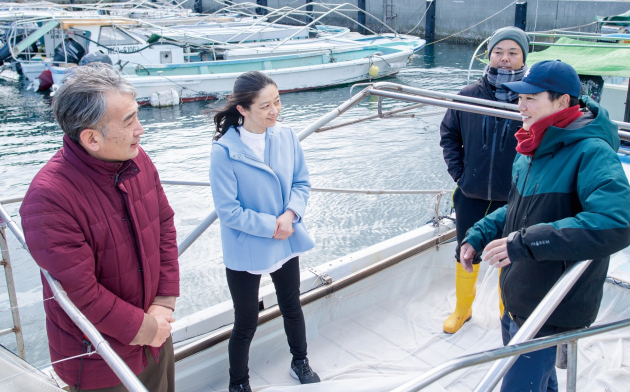
Shohei Yamashita (right) and Akira Yamashita (left) are as close as brothers.
Hamaguchi's grandfather, whose family business is seaweed farming, started cultivating black seaweed on Toshi Island. At one point, there were 18 farmers, but now there are only 7. Rising seawater temperatures due to global warming have reduced harvests, and it seems that black seaweed production is decreasing nationwide.
Amidst all this, we spoke with Akira Yamashita and Shohei Yamashita, the successors who will be in charge of the next generation of black seaweed cultivation on Toshi Island.
Akira says, "What really helped me was when Hamaguchi-san told me, 'Production volume is unstable and it's tough right now, but the unit price is going up. There is demand, so if you keep going, I'm sure it will work out. I want you to keep going.'"
Shohei said, "The challenges are not only the rising seawater temperature, but also the fact that the nutrients in Ise Bay, which are the food source for seaweed, are decreasing due to environmental changes. Two years ago, young seaweed farmers and fisheries cooperative staff from Toba gathered together and began working towards the 'revival of Ise Bay,' requesting that the government and related organizations take action to improve the marine environment."
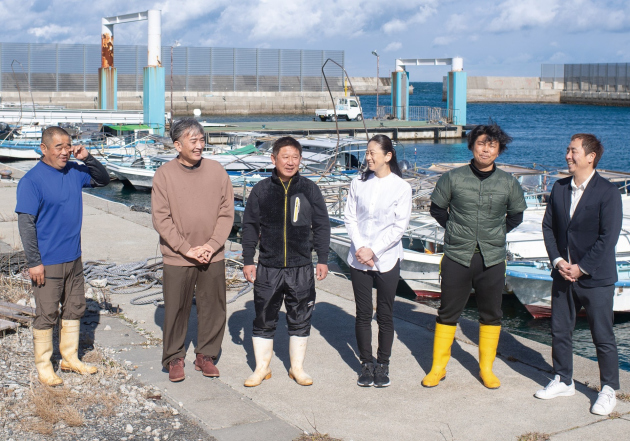
From left to right: Toshiya Yamashita, Chef Kurino, Toshiki Hamaguchi, Executive Chef Higuchi, Akira Yamashita, and Shin Onosato.
Hamaguchi, who has been cultivating black seaweed for 34 years, said, "Toshijima has developed and thrived by creating fishing methods that are suited to the times and the environment, such as for sand eels and Spanish mackerel. If we work hard now, black seaweed also has a future. I hope they will continue to pass on their local pride."
Executive Chef Higuchi said, "The techniques and spirit that have been passed down on Toshijima Island are truly remarkable. Not only is the black seaweed of high quality excellent, but the island's food culture is also fascinating. I would love for many people to know about it."
| Executive Chef Hiroe Higuchi | He was appointed Executive Chef of Shima Kanko Hotel in 2014 and was in charge of the working dinner at the Ise-Shima Summit in 2016. In 2017, he received the Bronze Award from the Ministry of Agriculture, Forestry and Fisheries' Chef Recognition Program, Cuisine Masters Award. In 2023, he was awarded the Chevalier of the French Order of Agricultural Merit. |
|---|---|
| Lian Yamabuki Head Chef Masaya Kurino | In 2020, he became head chef of Shima Kanko Hotel Teppanyaki Yamabuki. Using his extensive on-site experience, he serves teppanyaki dishes that allow you to enjoy conversation at the counter and a sense of realism. |
Spring Dishes from the Head Chef: A Culinary Story by Hiroe Higuchi
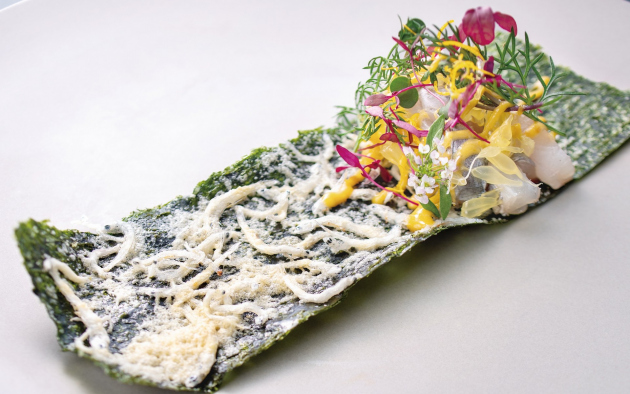
Fish from Toshi Island, wrapped in black seaweed with citrus sauce.
I wanted to express the beauty of the sea around Toba and Toshi Island, where various fish and seaweed thrive thanks to the blessings of nature. It was also a valuable experience to witness the islanders' food culture of wrapping various foods in seaweed. After speaking with them, I felt their pride and care for the things they produce, and I wanted to recreate that in this dish.
Black seaweed is topped with cheese and whitebait from Toshijima Island, then heated to enhance the crisp texture and aroma. Seasonal fish from Toshijima Island, the refreshing acidity of citrus fruits, and the vibrant colors of micro-herbs represent the arrival of spring. A citrus-flavored mayonnaise sauce accented with local Toba miso brings all the flavors together. We hope that by rolling it up and enjoying it, you will experience the richness of the sea off Toba as the flavors, aromas, and textures combine.
*The availability period may vary depending on stock availability.
| French Restaurant “La Mer” | the BAY SUITES 5F Dinner 17:30-21:00 (Last Order 19:30) |
|---|
Spring Dishes from the Head Chef of Traditional Japanese Cuisine: A Culinary Story by Kyoji Tsukahara
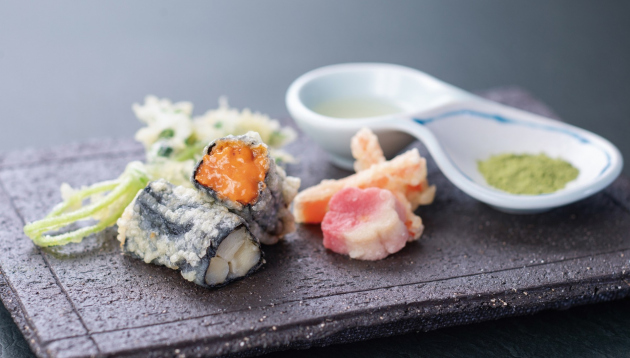
Deep-fried seaweed wrapped around sea urchin and SHINJU
We have expressed the appeal of black seaweed from Toshi Island, nurtured by the bounty of Ise Bay, through various cooking methods.
Shima, a region renowned for its SHINJU production, offers a unique dish featuring the adductor muscle of the SHINJU oyster (Akoya oyster) and sea urchin. Each ingredient is wrapped in black seaweed and deep-fried. Enjoy the melt-in-your-mouth texture of the semi-raw sea urchin and the sweet flavor of the Akoya oyster adductor muscle, a delicacy of high quality, along with the aroma of black seaweed.
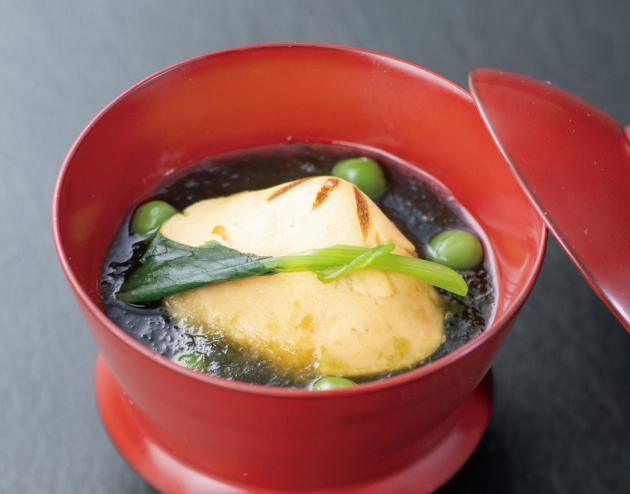
Pureed black seaweed
"Black Seaweed Puree" is a dish that makes the most of the flavor of the sea. Clams, also caught in Ise Bay, are wrapped in fish paste shaped like clams and steamed, locking in the delicious flavor of the clams. Black seaweed, known as "the vegetable of the sea" for its rich flavor, subtle sweetness, and abundance of minerals and dietary fiber, is a harbinger of spring. Enjoy it together with the clams.
*Depending on stock availability, we may not be able to fulfill your order on certain days.
| Japanese Restaurant “Hamayu” | the BAY SUITES 4F Dinner: 17:30 - 21:00 (Last order 19:30) Lunch: 11:30 AM - 1:30 PM (Last order 1:00 PM / Reservations accepted until 8:00 PM two days prior) *Lunch is available for groups of 4 or more. Reservations are required at least one week in advance, starting in April. |
|---|
Return to Feature Articles List
Shima Kanko Hotel quarterly magazine "Shima Time"
The Ise-Shima region changes its appearance little by little with the gentle passage of time, providing us with the flavors and colors of each season.
As the seasons change, Shima Kanko Hotel quarterly magazine, "Shima Time," introduces the four seasons of Ise-Shima through the local culture and abundant nature.