Owase, Spring Yellowtail Story
Fishermen take on the challenge of tradition and innovation
From Shima Time, Spring 2024 issue


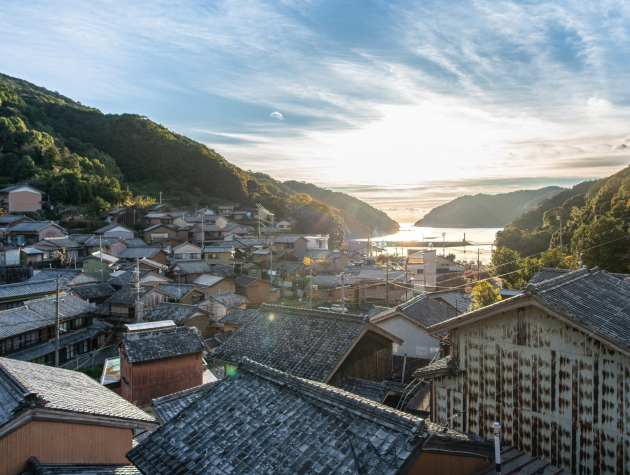
Located in the southern part of Mie Prefecture, Owase City is blessed with the Kii Mountains and a scenic ria coast, and is a region where forestry and fishing thrive. Nine small fishing villages are scattered along the inlet, including the port town of Owase. Among them, Owase, Kuki, Haida, and Kajika have been yellowtail producing areas since the Meiji era, and the yellowtail known as "spring yellowtail," which is landed from the end of March to the end of April, is the main industry of the fishing villages of Owase.
In Hayata, there is "Hayata Ooshiki Co., Ltd.," whose shareholders are mostly local residents, and its 14 employees work as fishermen in large-scale fixed net fishing (Ooshikiami fishing). Eight of them are newcomers to the town, and the average age is a young 44, and they are also putting into practice fishing practices that are in line with the times. There, we see people who are reviving the town's industry that was on the verge of disappearing and moving forward powerfully towards the future.
A fisherman's challenge: a blend of tradition and innovation.
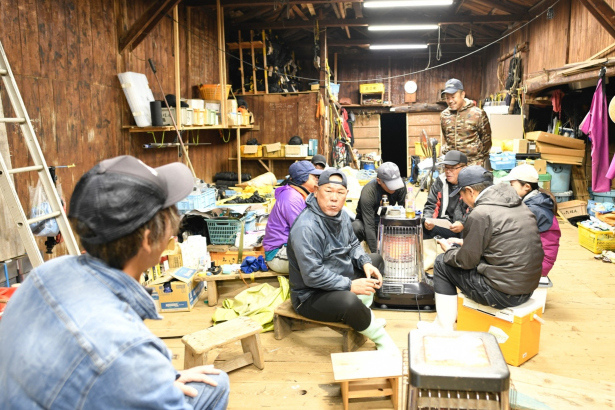
Kyosuke Nakai, a fisherman who has moved to the area and serves as the fishing master in charge of the fishing operations, showed me the barn where the fishermen gather. There is a whiteboard with information on the types of fish caught, the market price, sales figures, and schedule, and a meeting is held with all the fishermen before they set sail. After that, they load their goods onto the fishing boat and set sail a little after 5 a.m.
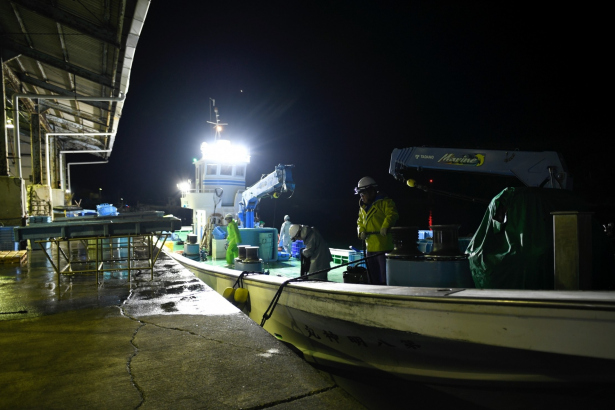

Executive Chef Higuchi and Executive Chef Tsukahara of Traditional Japanese observe the large-scale net fishing operation.
After sailing offshore for about 10 minutes in the still-dark sea, you'll reach the fishing grounds, where a large net, approximately 375 meters long and 90 meters wide, is set in water 65 to 75 meters deep, adapted to the topography of the ria coast.
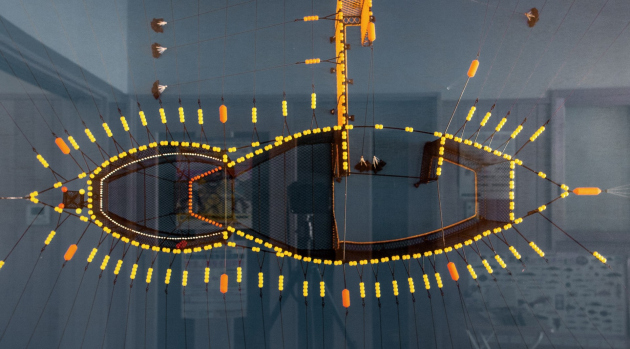
A model of a large fixed net. In fishing, the small square net in the left corner is lifted up.
In Hayata, yellowtail fishing is carried out using a large-scale fixed net fishing method that takes advantage of the fish's tendency to move forward, catching the fish that gather at the end of the net. Ropes are attached to the end of the set net, and each rope is wound onto eight hydraulic rollers on the boat and pulled up.
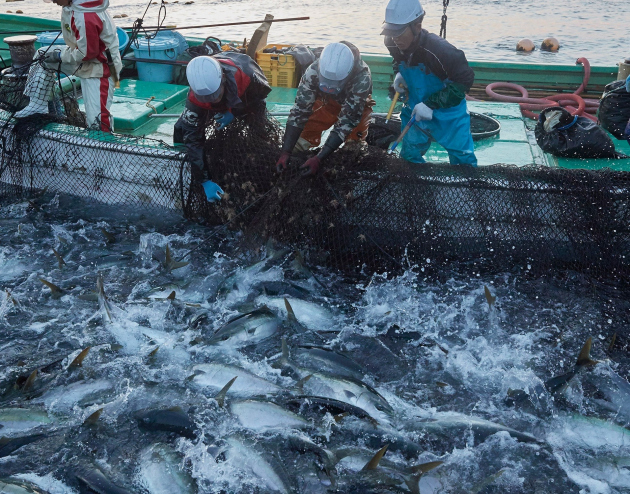
Scenes from the spring yellowtail fishing at Hayata Ooshiki

The signal is given to pull up the net.
At that time, the fishermen signal to each other to prevent the fish from escaping, and slowly pull in the net on both sides simultaneously.
Head chef Tsukahara of the Traditional Japanese department observed with interest, saying, "Everyone is working in perfect harmony." Onboard, the fish were being quickly sorted, killed, and then chilled on ice.
Chef Kurino said, "Not only do they catch the fish, but they also process them carefully to maintain their freshness. I was surprised at how fast they did it."
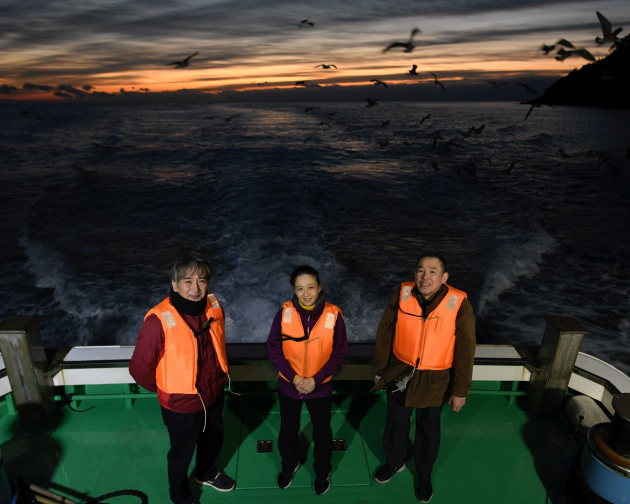
After hearing the story, Executive Chef Higuchi said, "I had heard from a fishmonger in Owase that Hayata's fish are delicious because the fishermen are skilled at preparing them, and now I understand why. I could feel the fishermen's passion for the sea and their fish, and their willingness to go to great lengths to deliver the fish they catch in the best possible condition."
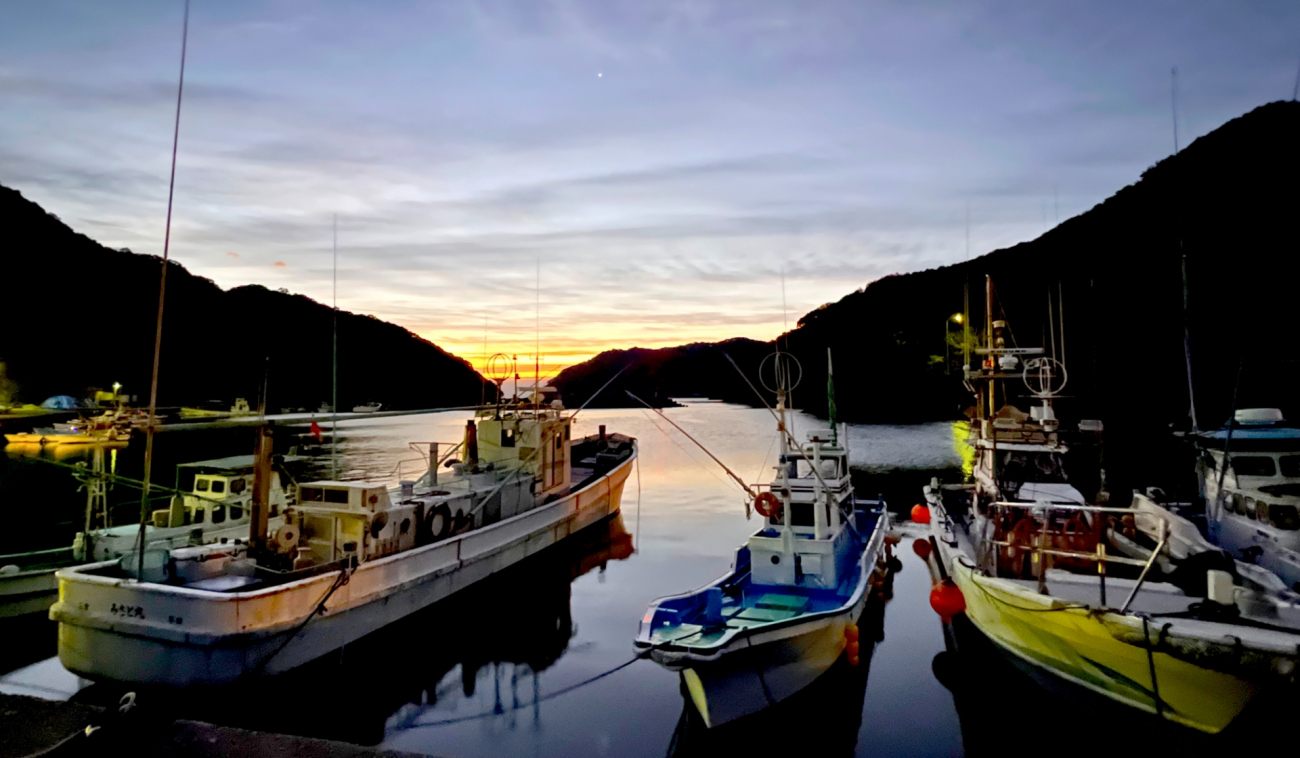
Supporting migrant fishermen in the community: life in a fishing village

Left: Mr. Iwamoto, President of Hayata Daishiki Fishing Co., Ltd. Right: Mr. Nakai, Fishing Master.
We asked Mr. Nakai, who had just finished fishing, and Mr. Yoshikazu Iwamoto, president of Hayata Ooshiki, about the appeal of the energetic spring yellowtail that arrives in the waters off Owase on the Kuroshio Current.
Nakai says, "Spring yellowtail has just the right amount of fat in its flesh, resulting in a melt-in-your-mouth texture, so I recommend yellowtail shabu-shabu."
Iwamoto, who was born and raised in Hayata, says, "The back portion of fresh yellowtail is characterized by its firm flesh and satisfying chewiness. The belly portion is fatty, and if you let it rest for a few days, the fat blends into the flesh, making it soft and delicious sashimi. There is also a local dish called 'bekko sushi,' which is sushi topped with a sweet soy sauce glaze."
When it came to accepting newcomers, Mr. Iwamoto was particularly careful about the differences in lifestyles between young people in the city and those in fishing villages. He asked the mothers of Hayata to look out for the young fishermen who had moved to the area and to help them with their daily lives.
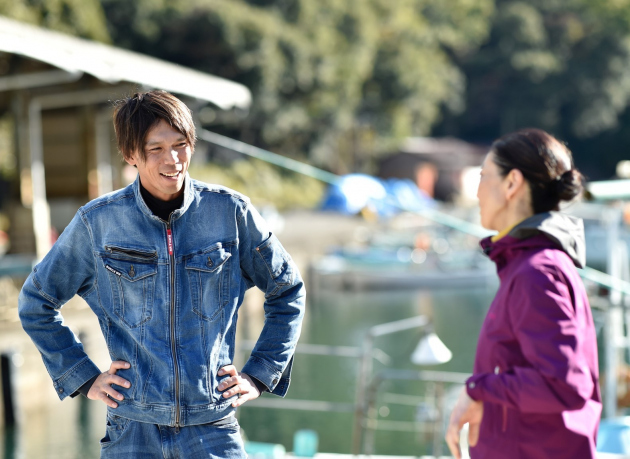
Nakai said, "When I first moved to Hayata, I couldn't understand the dialect, and there were times when I didn't understand what the senior fishermen were saying, so I often got scolded. I was scolded, but I didn't understand the meaning of what they were saying. It was tough. But going out with my friends who are also fishermen who have moved here to clear my head and I feel refreshed, and when I come home after fishing, there's a meal prepared by the local ladies waiting for me. I'm grateful for those kinds of things, and they became the driving force that kept me going as a fisherman."
A new wind that will change the times
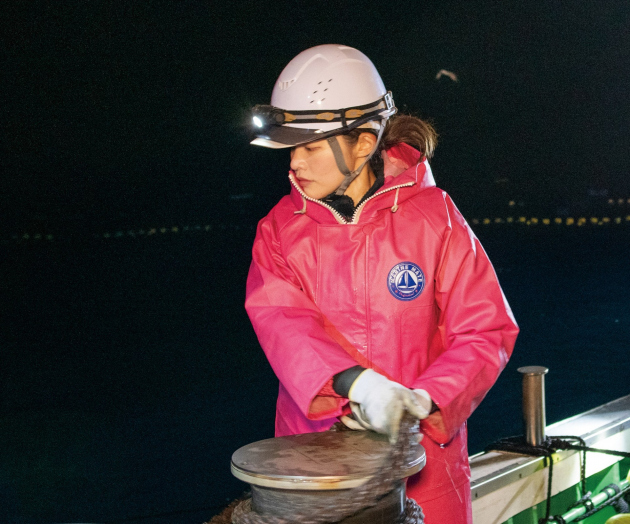
Mr. Kanazawa fishing from a fishing boat.

We are also taking on new challenges through fishing.
In July of last year, Hayata became the first female fisherman in Mie Prefecture to work in large-scale fixed-net fishing.
Maki Kanazawa, who is from Ibaraki Prefecture, said, "The reason I decided to move here was because of the warm welcome I received from the local people and the atmosphere of the company. My previous job was in customer service, so from now on I want to be involved not only in catching fish but also in communicating with customers and in branding the spring yellowtail."
While yellowfin tuna are also caught during the yellowfin tuna fishing season from June to July, there was a problem in that they were too thin to be sold after their spawning season.
"We are planning to raise yellowtail in fish farms built in the sea, so that they can grow large enough to be shipped in time for the peak demand at the end of the year. To make it as close to wild as possible, we only use fish as feed, and the fish used as feed are underutilized fish that would otherwise not fetch a price, caught in Hayata's large-scale net fishing, thus ensuring that marine resources are recycled without waste."
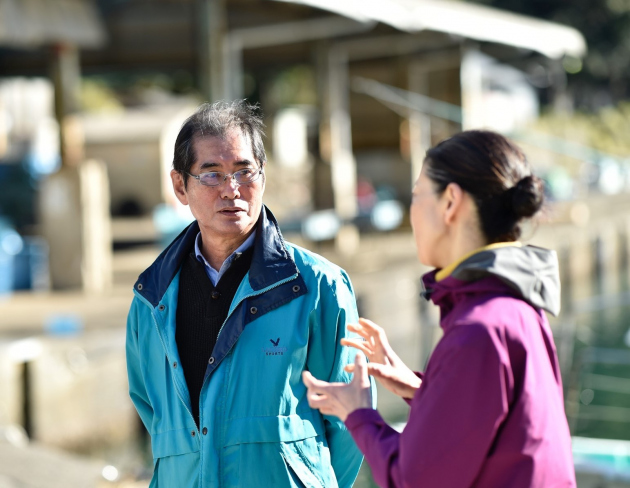
Hayata Daishiki is a place where various ideas are born and taken shape. We spoke with President Iwamoto about the future.
"I was born in Hayata and grew up with the traditional customs of large-scale fixed-net fishing. In the top-down world of large-scale fixed-net fishing, it was almost unheard of for fishermen to gather and report on the previous day's sales. But now, by sharing information, the fishermen's motivation and sense of camaraderie are increasing. I want to increase the number of people who can support the new form of fishing they are creating and nurture it. I believe that this will also lead to contributing to the local community."
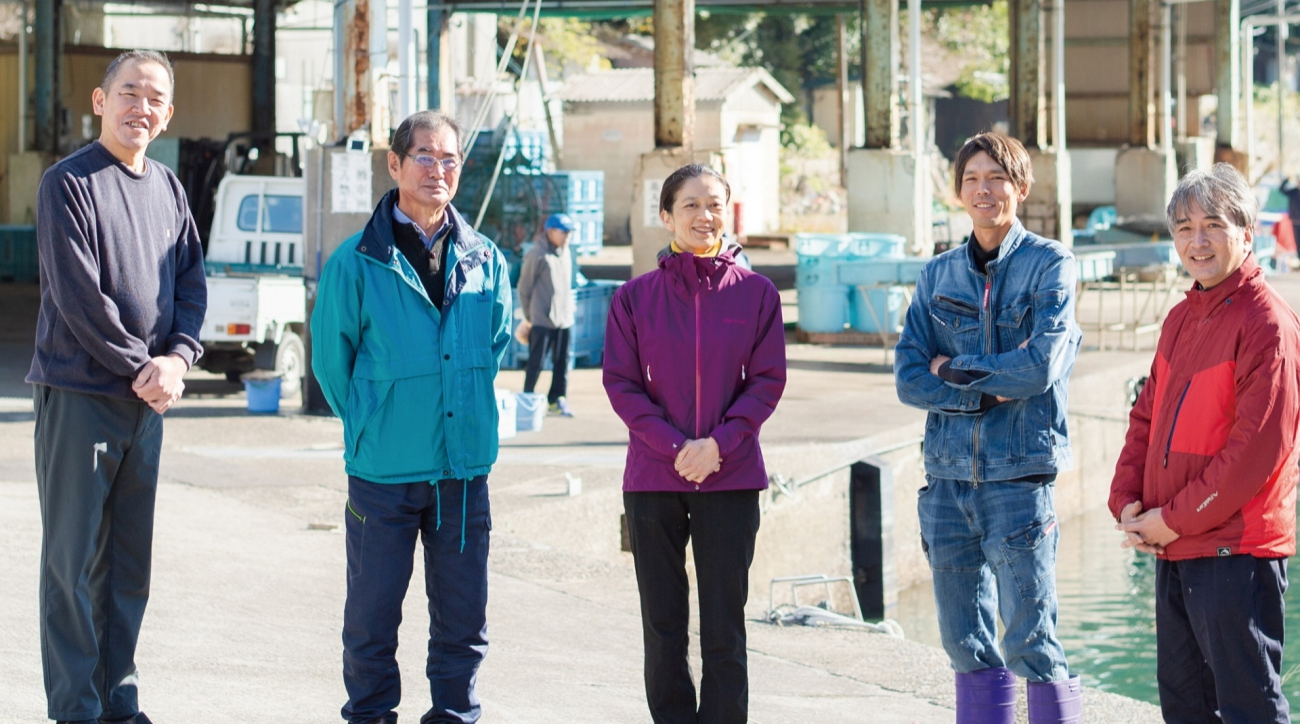
From left to right: Executive Chef Traditional Japanese(Japanese cuisine), Ms. Iwamoto, Executive Chef Higuchi, Ms. Nakai, and Chef Kurino (at Hayata Fishing Port)
| Executive Chef Hiroe Higuchi | He was appointed Executive Chef of Shima Kanko Hotel in 2014 and was in charge of the working dinner at the Ise-Shima Summit in 2016. In 2017, he received the Bronze Award from the Ministry of Agriculture, Forestry and Fisheries' Chef Recognition Program, Cuisine Masters Award. In 2023, he was awarded the Chevalier of the French Order of Agricultural Merit. |
|---|---|
| Traditional Japanese executive chef Kyoji Tsukahara | In 1987, he trained at the Japanese restaurants "Miyako" and "Uemachi" at the Miyako Hotel Osaka(now the Sheraton Miyako Hotel Osaka ). In 2016, he was involved in providing Traditional Japanese cuisine at the Ise-Shima Summit. In 2019, he was appointed Executive Chef of the Traditional Japanese at the Shima Kanko Hotel . |
| Lian Yamabuki Head Chef Masaya Kurino | In 2020, he became head chef of Shima Kanko Hotel Teppanyaki Yamabuki. Using his extensive on-site experience, he serves teppanyaki that allows you to enjoy conversation at the counter and a sense of realism. |
Spring Dishes from the Head Chef: A Culinary Story by Hiroe Higuchi
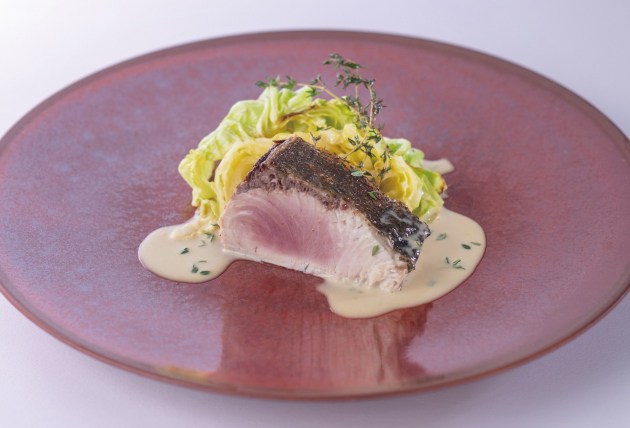
Yellowtail with thyme, served with spring cabbage.
We've brought out the charm of Mie's prized spring yellowtail through two dishes that showcase its unique flavor profile.
We use the freshest, firmest, thickest cuts of pork back to create a dish with a real presence. We aim for a tender finish, similar to when the meat is roasted as a whole piece. We sear the skin side first over high heat, then let it rest and let the residual heat cook the entire piece. The result is crispy skin and moist flesh. We pair it with a thyme-infused wine blanc sauce. We serve it with tender spring cabbage that has been roasted to enhance its sweetness.
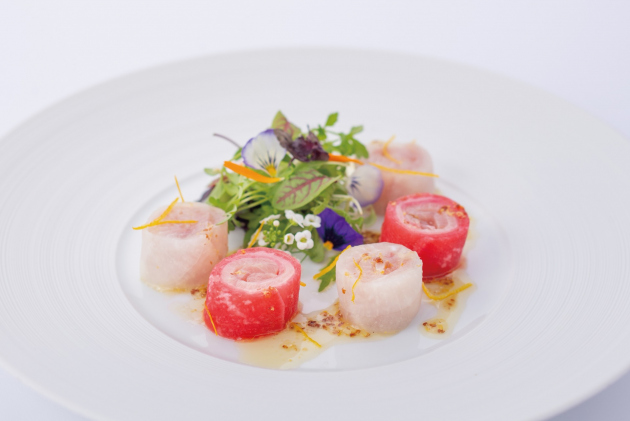
Cold yellowtail and daikon radish
Next up is chilled yellowtail and daikon radish, a dish that pairs well with yellowtail. The back and belly portions are marinated separately. The fatty belly portion is wrapped in pickled red radish, giving it a refreshing vinegared finish that allows you to fully appreciate the flavor of the fish. The back portion, which has a pleasant texture, is wrapped in salted radish with a hint of yuzu peel, simply expressing the original flavor of the yellowtail. This dish is also beautiful in its appearance, so please enjoy it as well.
*Availability may vary depending on the menu.
| French Restaurant “La Mer” | the BAY SUITES 5F Dinner 17:30-21:00 (Last Order 19:30) |
|---|
Spring Dishes from the Head Chef of Traditional Japanese Cuisine: A Culinary Story by Kyoji Tsukahara

Spring Yellowtail Sansai
Enjoy this dish featuring fresh spring yellowtail from Mie Prefecture, prepared in three ways that highlight its freshness. Thinly sliced yellowtail belly is served shabu-shabu style. By dipping it in the broth two to three times, the fat of the natural yellowtail melts smoothly, allowing you to savor its rich flavor.
For the yellowtail and daikon radish dish, we use the thick fillets from the back of the yellowtail. By cooking the yellowtail and daikon separately, we carefully bring out the flavor of each. The daikon is decoratively cut and simmered slowly in a broth made from grilled yellowtail bones to allow the flavor to permeate. The yellowtail fillets are cooked in bonito broth until moist and retaining a pleasant texture, then served on a plate with the daikon.
We plan to offer this during the "Takumi" season from March to May, and the "Sanshi Suimei" season (starting in April).
*Depending on stock availability, we may not be able to fulfill your order on certain days.
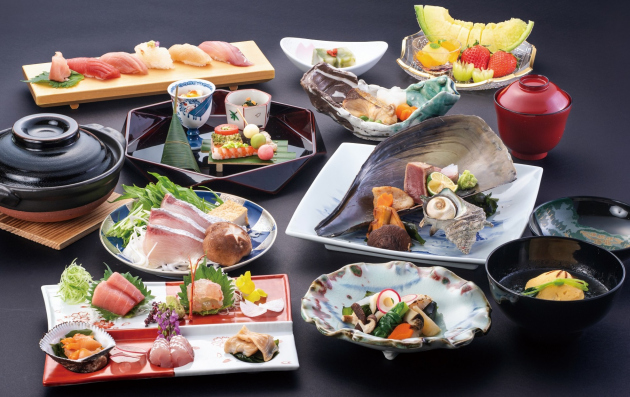
Spring Miketsukuni Kaiseki Course
Spring is the season of new beginnings. We have prepared a Miketsukuni Kaiseki Course featuring auspicious spiny lobster, yellowtail (a fish that symbolizes success), and shellfish that are in season.
Enjoy the sweetness and texture of spiny lobster, fatty yellowtail from Mie Prefecture, seasonal shellfish, and Ise tuna as sashimi. For grilled dishes, we have butter-grilled scallops, Ise-Shima shells stir-fried in sake and finished with soy sauce and then grilled, and seared Ise tuna. For soup, we have a pureed soup made with black seaweed from Toshi Island and clam paste. For simmered dishes, enjoy yellowtail and daikon radish stew and yellowtail simmered with ginger, and plenty of other seasonal ingredients.
Spring Miketsukuni Kaiseki Course
March 1st (Fri) - May 31st (Fri)
¥33,500 *¥35,000 from April
*The origin of the product may change depending on availability.
| Japanese Restaurant “Hamayu” | the BAY SUITES 4F Dinner: 17:30 - 21:00 (Last order 19:30) Lunch: 11:30 AM - 1:30 PM (Last order 1:00 PM / Reservations accepted until 8:00 PM two days prior) *Lunch is available for groups of 4 or more. Reservations are required at least one week in advance, starting in April. |
|---|
Spring Dishes from Teppanyaki "Yamabuki" Head Chef: Masaya Kurino's Culinary Story

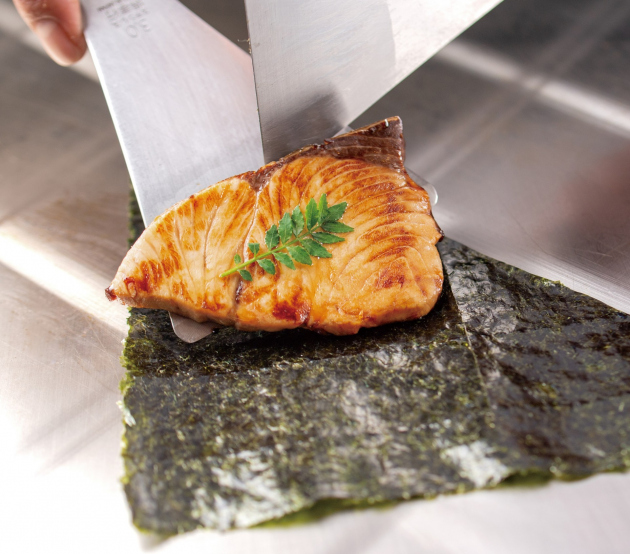
Spring yellowtail from Mie Prefecture, black seaweed from Toshijima Island, yuzu miso, and sansho pepper.
We've combined yellowtail, a fish that signals the arrival of spring in Mie Prefecture, with black seaweed from Toshijima Island.
The nori seaweed is heated on a griddle to create fragrant roasted nori. The back portion of the yellowtail, which arrives in a fresh state, is marinated to remove moisture and concentrate the flavor before being frozen. Since the texture of yellowtail changes greatly depending on how it is cooked, the cooking process begins from a frozen state, imagining the temperature and texture when it will be eaten. The yellowtail is quickly dipped in boiling water, then spread with yuzu miso made by kneading Ise white miso with yuzu from Mie Prefecture, sprinkled with grated yuzu peel, and rolled in nori. The soft, melt-in-your-mouth texture of the fish, the gentle sweetness of the yuzu miso and the refreshing acidity of the citrus are enveloped by the oceanic flavor of the black nori seaweed.
The fish is marinated in soy sauce flavored with sansho pepper and ginger, then grilled on a hot plate to add aroma and lock in the flavor. When wrapped in nori seaweed with sansho leaves, the sansho flavor enhances the umami of the yellowtail, creating a different taste. Enjoy the crisp texture of the black nori seaweed as well.
You can enjoy it as part of our "Spring Delights Couple Dinner" from March to May.
¥67,000 for two people
*From April, the price will be ¥70,000
| Teppanyaki Restaurant “Yamabuki” | the CLUB 2F (Reservations required) Lunch (weekends only) 11:30 - 13:30 (Last order 13:00 / Reservations accepted up to 20:00 two days in advance) Dinner 17:30 - 21:00 (Last order 19:30 / until 20:00 the day before) *Closed on Wednesdays. *Lunch is available for groups of 4 or more (reservations required at least one week in advance, starting in April). |
|---|
Return to Feature Articles List
Shima Kanko Hotel quarterly magazine "Shima Time"
The Ise-Shima region changes its appearance little by little with the gentle passage of time, providing us with the flavors and colors of each season.
As the seasons change, Shima Kanko Hotel quarterly magazine, "Shima Time," introduces the four seasons of Ise-Shima through the local culture and abundant nature.